Book Excerpts

Book Excerpt 26: It's Alive! The Frankenstein Effect

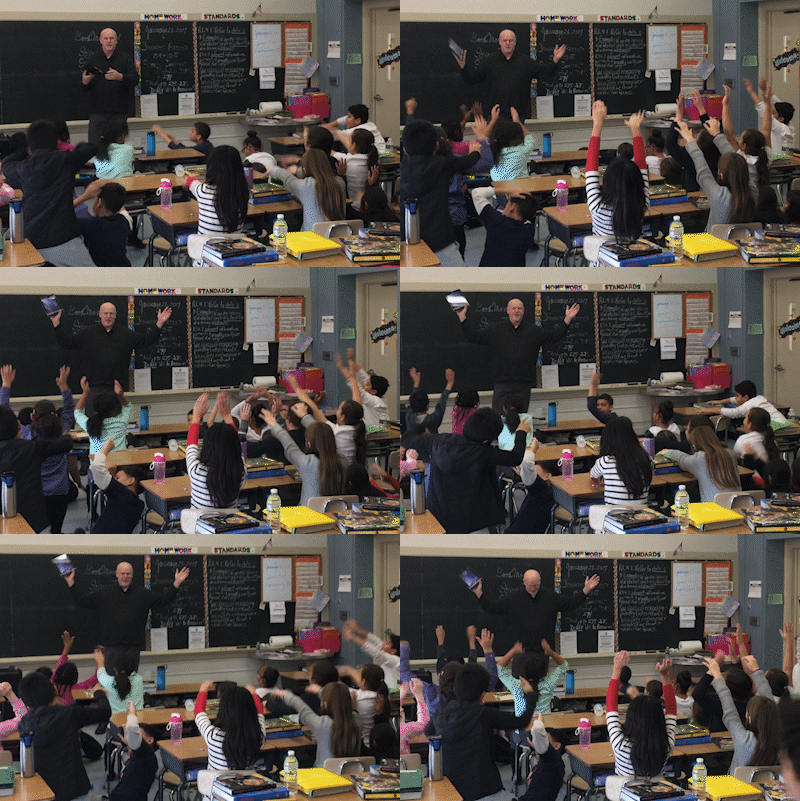
The Frankenstein Effect: When their animation is played back for the first time.

“Okay,” Joe says. “We have two sessions left.”

“Today we’ll finish off the dialogue and sound effects—one group at a time—out in the hall.” “That way we won’t have the background noise of the classroom in our dialogue.”

The teacher pipes in. “Joe, you can use our coat room. I think it’s quieter than the hall.”

“Oh,” says Joe. “I didn’t know you had a coat room. All that padding hanging up will be a great sound proof!”

He pauses, then adds, as if he’s presenting peer-reviewed research: “It may also enhance the smell of fourth grade sound session.”

The teacher laughs. The kids laugh too, because adult laughter is basically a starter pistol.

“Great,” Joe says. “Here’s the plan.”

“While I work with groups one by one, the rest of you revisit your scripts.” “Read them out loud.”

“Fix anything that feels off.” “If it sounds fake or weird, it will sound bad in your movie. No pressure!”

He points to the class like a coach pointing at the scoreboard. “Remember, and this is the big secret, when we do voiceovers, if you think of something funnier or more clever…”

He leans in. “And often you will…”

“…let’s record that too. We can always cut and paste your mouth loops to synchronize anything we come up with today.”

Joe pauses. "Improvising is gold at this stage. Your mind will automatically link the meaning of the sounds to the animation,”

Joe continues. “Let's get your story living and breathing. Sound and your voices make your movie come alive.” He points to their iPads.

“We’ve been planning and writing and drawing and cutting and animating for a dozen sessions.”

The kids are rapt.

“We’ve earned the luxury of stepping into the coat room to finish off your masterpieces. I can’t wait to see what happens.”

They realize this is a moment of truth. Voicing their characters requires acting.

Tone. Inflection.

Pacing. Enunciation.

Things they’ve spent their whole lives trying to get right - or being corrected on - now applied to their fictional cut paper animations. Their story.

“One other thing,” Joe says. “We need sound effects too.”

“And we’re going to keep it as simple as possible.” “We only need two things.”

He holds up a finger. “Your mouth.”

He holds up another. “And a piece of paper.”

The kids have been told this before, but now that voiceover day is here, they lean in like it’s the secret menu. Joe smiles.

“The most powerful sound-effect library resides behind your lips, right?” Joe says.

“But you already know.” “You’ve been making silly sounds your whole life.”

“Who can do an elephant?” The entire class purses their lips and expels 'elephant'. Some go for the stomp.

Laughter.

“Who can make an explosion?” BOOMS ring out.

A few add “pew pew” because fourth grade believes in bonus features. More laughter.

“Who can sing?” Opera, hip-hop, and rock ring out.

One kid does something that might be a sea shanty, but could also be a lunch chant. Joe nods like a talent scout.

“Who can make a bell or an alarm sound?” Simulated recess bells ring.

One kid nails the exact pitch of the school bell, which is both impressive and vaguely unsettling. Joe claps once.

“Great,” he says. “Now watch this.”

He pulls out a piece of paper and crumples it. It’s just paper, but in his hands it becomes theatre.

“Close your eyes,” Joe says. “Imagine you’re sitting around a campfire roasting marshmallows.”

The kids close their eyes, and a few smile instantly. Joe takes the crumpled paper and holds it like he’s making a snowball.

He turns it around and around in the hollow of his cupped hands. The paper whispers and crackles.

“Fire!” yells the kids. “Yes!” Joe says. “You got it.”

“Paper makes great fire.” He grins. “Now this—keep your eyes closed.”

Joe pats the wad of paper rhythmically. Tap-tap. Tap-tap.

“Footsteps!” the kids guess. “Yes,” Joe says. “One more.”

He slowly tears the paper. Riiiiip.

“Duct tape!” “Ripping an arm off!” “Opening an envelope!” “Taking wrapping off a new toy!”

Half a dozen guesses fly out like popcorn. Joe holds up the paper like it’s an Oscar.

“Paper can be fifty sounds.” He lets that hang for a beat.

“And here’s the important part,” he says. “Our audience’s eyes will be busy with our animations.”

“Their ears will be busy assigning meaning to your mouth sounds and the paper.” “And their brains will do the rest.”

“They’ll turn your still drawings into motion.” “And they’ll turn your simple sounds into a whole world.”

He spreads his hands. “This is crazy stuff, my friends.” “And by ‘crazy,’ I mean ‘Foley.’”

The kids look confused.

"When you watch the end credits to a movie, look for "Foley artists. That's what we are doing today. SFX is short for sound efffects in movie speak, and the Foley artist is that person. So let’s get to it.” He points at the first group.

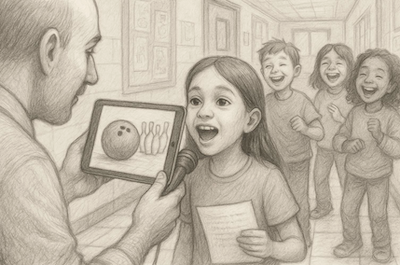
“Bowling Ball group, come back to the coat room and bring your storyboard and iPad.” He pauses, searching for the line.

“Let’s… er… hum… get rolling.” He winces. “Pardon the pun.”

The kids groan in the way kids groan when they secretly love it. Joe turns back one more time.

“Oh and one other thing.” “We have poster boards here.”

“If you find yourself finished and waiting, start making your poster.” “We’ll put it up at the premiere.”

“Really dress it up. Use the rule of thirds there too.”

He points to the back of the room. “You guys have a ton of books back there.”

“Look at the book covers. They serve the same purpose as movie posters. They’re great inspiration.”

Then Joe disappears into the coat room with the Bowling Ball group. Inside, it feels like a recording studio - if a recording studio were built by children and filled with winter jackets and the faint smell of lost mittens and half eaten snacks stashed in the pockets.

“Okay,” Joe says. “What are you most concerned about?”

A kid answers immediately. “We don’t know what the bowling pins are going to chant at the bowling ball to make the bowling ball mad.”

Joe looks at their dialogue sheet. “I thought you guys had something.”

Another kid says, “The teacher says we can’t swear.” “But the bowling pins should say something bad so the ball can get back at them.”

Joe nods, “All right.” “Let’s look.”

He reads their line. “‘Hey, baldie, you can’t get us.’”

Joe looks up slowly. “I’m bald.” “I didn’t know that was a bad thing.”

The kids freeze. One kid, brave and sincere, says, “Mr. Joe… your head does kinda look like a bowling ball.”

Joe laughs. He sticks a finger in each nostril and his thumb in his mouth.

Muffled, he says, “You’d probably hold my bowling-ball head in these three holes too.” The kids explode laughing.

It’s gross. It’s ridiculous. It’s also exactly what fourth grade finds hilarious.

Joe wipes his hands dramatically on an invisible towel. “Okay.” “Come on.”

“We can do better than this.” He leans in.

“What are some other taunts?” “Any idioms, slang, or songs that would make a bowling ball mad?”

Everybody pauses. Nothing.

A beat. Then another beat.

Then one of the boys sings a phrase from a popular classic song. Softly at first, like he’s testing whether it’s allowed to exist.

The group stares at him. Then the realization hits them all at once.

“Yes!” they shout. “That’s it!”

They all start laughing, including Joe. Especially Joe.

It’s the laugh of a man who knows the genius moment this is.

“Okay,” Joe says, holding up a hand. “That! Let’s go with that.”

“But promise not to tell anyone until the premiere.” He lowers his voice. It’s our secret. You’ll get a great laugh. Why? Because it is perfect and it made us laugh and we've been living with this story for a long time. Brilliant”

The kids nod like they’ve just joined a secret society.

They record it. First take: too quiet.

Second take: too chaotic. Third take: perfect.

A chorus of bowling pins taunting their hero, the oft-guttered bowling ball. His revenge will be sweet.

When they’re done, the group emerges from the coat room with Cheshire-cat grins and giggles.

“Okay,” Joe calls out to the classroom. “Turtle group—your turn.”

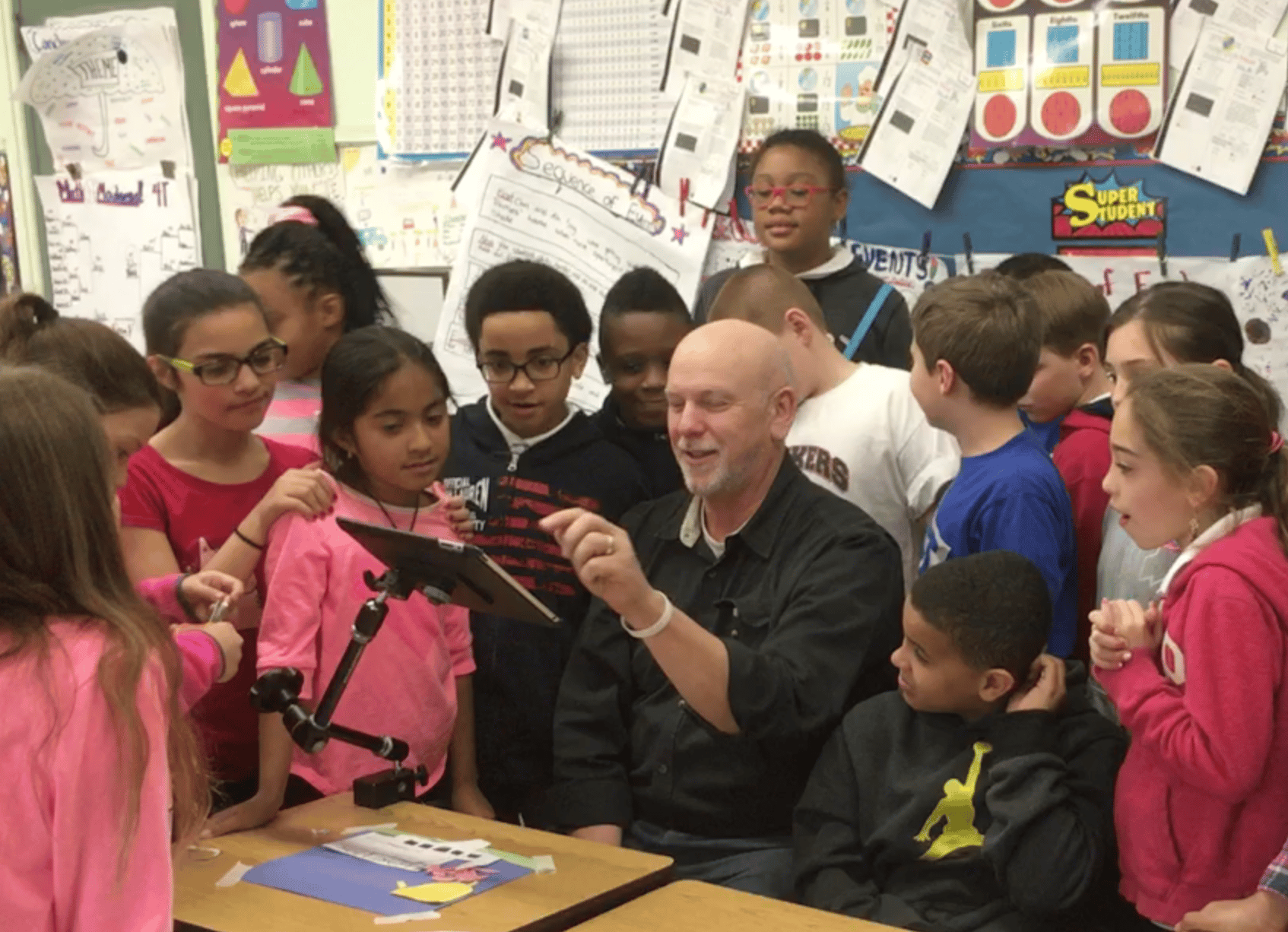
One by one, he rotates each group into the “sound studio.” Sometimes the kids run the record button on the iPad. Sometimes Joe holds the microphone end of the iPad like a boom mic above the group for chorus voice overs. A real team effort.

And sure enough, each movie transforms when the sound is applied. It enters another universe. Nothing can prepare them for this moment. Because suddenly the characters aren’t just moving.

They’re speaking. Breathing. Existing.

When their inventive vocals are married to their handcrafted animated characters, they truly see their creations come to life. We call it the Frankenstein Effect. That even though they invented it, animated it, drew it, when it plays back they have the overwhelming feeling that…

…it’s alive.

It lives on the screen, over there, in another world, when up to this point they were the assemblers with hands on, stitching it all together.

The play button is the electricity that breathes life into their character.

This day is Joe’s favorite. All the blood, sweat and tears and tedium and organization and teamwork finally pay off.

They come in fully formed as hams. As actors. As clowns. As W.C. Fields once said, “'Child actor' is a redundant term.” In this coat room, it’s eternally true.

Little Lawrence Oliviers.

As the posters get designed and the vocals and sound effects get inserted, the kids feel something rise in them. A sense of competence.

A sense of ownership. A sense of, "Wait—this might actually work."

Joe steps back into the classroom between groups. He raises his voice.

“Let me remind you,” he says. “A local theater has donated their screen for your world premiere.”

“Next month we’ll be sending a stretch limo to pick you up.

The kids stop in their tracks with buldging eyes and gasps.

"So start thinking about what you might wear. Go down to the dollar store. Pick up a feathered boa. A fancy hat. Something. Dress up. Let’s have some fun with this.”

A young lady up front raises her hand. “A limo?” she asks. “A stretch limo?”

“Oh yes,” Joe says. “The longest stretch limo we can find. It’s long and yellow. It can fit the whole class.”

The kids lean forward, eyes wide. Joe waits half a beat, then the truth sinks in.

“A bus?”

The class groans and laughs. Joe offers a wicked smile. Because of course.

Joe calls out over his shoulder as he heads back toward the coat room: “But we WILL have a red carpet when we roll off that bus—so be ready for paparazzi!”

Stay tuned for more book excerpts and a digest of all previous chapters.


Anti-AI-Slop Solution. Hand-made by humans with a little tech sprinkled in..

More Testimonials:

"I am impressed by...these programs, providing young people with the skills to become creative and critical thinkers...this shares my dedication to nurturing the next generation of filmmakers and visual storytellers."— Steven Spielberg - Referencing the work of Joe Summerhays“​

"Joe (Animating Kids Founder) has turned the art of movie making for kids into a science.” — Jonathan Demme - Academy Award-Winning Director

“I absolutely love Animating Kids...you have no idea how amazing it is for a span of K-9. I’ve got the whole building covered and my planning was done for me. The kids LOVE the Animation Chefs. Win, win!!”J. Tuttle - Media Specialist

"When I found Animating Kids it changed everything. Small and not so small humans became masters of sound and motion on any subject via small group PBL dynamics."Rachel - Tech Coach - Quebec​

Animating Kids has changed everything! Fun, relevant media-making lessons for kids, and total P.D. for my non-film making teachers. A complete solution!!” — Principal - Bronx NY

​"Animating Kids really helps focus our students during remote sessions…it keeps them so engaged. Your secret recipes are a life saver." — Marisol - Sacramento Ca

"The kids love the demonstrations and it is P.D. for me as I tee it all up. Animating Kids makes me the coolest educator in their lives!" — Charlotte - London UK

"This is the most important skills-based content for today’s kids. I don't think primary educators get how impactful this approach can be. It respects media content creation as the basic literacy it is for today’s kids. — Monique - White Plains NY

“We went through the entire process (PD workshop) of learning animated filmmaking with our tablets and smartphones. We could barely keep up. In the end we came away exhilarated rather than exhausted.” — Cathy S. - Librarian​

"My head was spinning. It involved: math, writing, science, team building, art, language arts, engineering, improvisation, innovation, acting, etc. Along with another dozen areas I can’t recall. Sneaky comprehensive. Mind blown. Can’t wait to use it in class.” — Marcia - 4th Grade Teacher

“Animation Chefs have created a really inspired program! My test group of (hardened gang members) like to laugh at the videos, and they love the simple clear explanations. They just have a blast...”
— G. Zucker Austin TX

"Thank you SO much for sharing your wealth of information and opening this world to every kid! I first learned about you when my husband introduced our daughter to you. Now I am bringing it into my after school program. I’m so psyched!" — Joy H. Retail After School Specialist

"Kids sign-up for robotics, coding, and stop motion sessions. After taking all three, they rate stop motion as their favorite track BY FAR. Animating Kids is key to our success." — Shane V. After School District Lead

Book Excerpt 25: AI Slop Survival Kit - Introduction To The Book

“Seeing Is Believing”?

Those days are over.

Reverse the clock 20 years. In the early YouTube era, “Broadcast Yourself” was the promise. Mass distribution went permanent. But it still required humans, time, production, archives, effort, and friction.

It seems quaint now.

Youtube's original motto “Broadcast yourself” has mutated into “AI will broadcast anything.” Authenticity can be imitated at industrial scale, and the cost of persuasion has collapsed.

So what’s the antidote? Short of unplugging every screen and moving to a cabin with a typewriter?

WHY THIS BOOK, WHY NOW

Twenty years ago Animating Kids and other media skills programs would have been powerful enrichment. In 2026, it’s basic defense.

The media environment is increasingly chemically contaminated.

We need practical inoculation for any educator or parent who can feel AI slop’s undertow.

Recently, Merriam-Webster crowned “Slop” its 2025 Word of the Year, defining it as low-quality digital content produced in bulk by AI. Translation: we finally built a machine that manufactures nonsense faster than humans can scroll past it. Progress.

REALITY CAN BE PRINTED ON DEMAND

Real-looking media can now be produced faster than your brain can evaluate it. The old human defenses, intuition, “vibes,” the comforting belief that “I can tell,” are getting smoked.

Research keeps landing on the same awkward conclusion: in the hardest cases, people are barely better than chance at reliably spotting AI-generated images.

And once media becomes unlimited, the scarce resource isn’t information. It’s your nervous system:
Attention. Emotion. Identity. Belonging. Outrage. Fear. Desire.

The business model is persuasion at scale, tailored, optimized, and relentless. Media with a plan for your nervous system.

Even Adam Mosseri (head of Instagram) said the quiet part out loud: “you can’t trust your eyes the way you used to.” Which is a thrilling statement from a man whose job is basically Head of Looking at Things.

It helps to remember what a screen actually is.

There is no motion on a screen. There are still images, 24 (or 30, or 60, or 120) per second, flashed fast enough to shove your mind into automatic decoding mode.

Ever since stories started glowing from screens in the late 1800s, human nervous systems have been hijacked by illusion, for good and for ill.

Your brain invents movement without asking permission. You don’t just watch the screen. You enter the matrix.

What’s new is the speed, the scale, and the fact that the illusion can now be generated without a human hand anywhere near the craft, and still look human-made.

Whoever controls and edits what you see, when you see it, and how it’s framed plays the banjo with your head. When the “producer” is AI, your internal story can become the fruit of the algorithm's tune.

Scary?
Yes.
Also: predictable. So we can inoculate.

HOW OUR INOCULATION WORKS

Animating Kids doesn’t merely warn students about persuasion. It trains them to build persuasion, slowly, deliberately, frame by frame, on a human level until they can see the levers, knobs, and dials behind screen-based messaging.

That’s why we teach through stop-motion storytelling. Stop motion is wonderfully inconvenient in exactly the right way. It forces persuasion into daylight at human speed. It makes the “trick” visible.

And we do it in a PBL team-based context.

As we build a story from scratch and bring it to life, we pause constantly to point out the miracle and the danger of the mind’s astonishing ability to create meaning from illusion, automatically, instantly, and often unquestioningly.

And we encourage a form of testing entirely unique to regular academic studies. The moment that rewires everything: the screening.

When a student watches strangers laugh, cry, gasp, or scream exactly where the student planned, something snaps into focus. The child realizes, in their bones:

“They felt emotion” doesn’t mean “it’s true.”
It means “it worked.”

That insight, earned not preached, makes them harder to manipulate for the rest of their lives. Not cynical. Fluent.

We've taken them behind the scenes at the magic show. We reveal the angles, the sleights, the patter, while pointing out that today’s algorithm is doing the same magical illusion thing, only at light speed.

So we’re attempting to house all of our discoveries and insights and inoculation into this book: the secret recipes, the principles, the classroom moves, the proofs, and the links out to video demonstrations and student films so you can see it working in the wild.


Anti-AI-Slop Solution. Hand-made by humans with a little tech sprinkled in..

More Testimonials:

"I am impressed by...these programs, providing young people with the skills to become creative and critical thinkers...this shares my dedication to nurturing the next generation of filmmakers and visual storytellers."— Steven Spielberg - Referencing the work of Joe Summerhays“​

"Joe (Animating Kids Founder) has turned the art of movie making for kids into a science.” — Jonathan Demme - Academy Award-Winning Director

“I absolutely love Animating Kids...you have no idea how amazing it is for a span of K-9. I’ve got the whole building covered and my planning was done for me. The kids LOVE the Animation Chefs. Win, win!!”J. Tuttle - Media Specialist

"When I found Animating Kids it changed everything. Small and not so small humans became masters of sound and motion on any subject via small group PBL dynamics."Rachel - Tech Coach - Quebec​

Animating Kids has changed everything! Fun, relevant media-making lessons for kids, and total P.D. for my non-film making teachers. A complete solution!!” — Principal - Bronx NY

​"Animating Kids really helps focus our students during remote sessions…it keeps them so engaged. Your secret recipes are a life saver." — Marisol - Sacramento Ca

"The kids love the demonstrations and it is P.D. for me as I tee it all up. Animating Kids makes me the coolest educator in their lives!" — Charlotte - London UK

"This is the most important skills-based content for today’s kids. I don't think primary educators get how impactful this approach can be. It respects media content creation as the basic literacy it is for today’s kids. — Monique - White Plains NY

“We went through the entire process (PD workshop) of learning animated filmmaking with our tablets and smartphones. We could barely keep up. In the end we came away exhilarated rather than exhausted.” — Cathy S. - Librarian​

"My head was spinning. It involved: math, writing, science, team building, art, language arts, engineering, improvisation, innovation, acting, etc. Along with another dozen areas I can’t recall. Sneaky comprehensive. Mind blown. Can’t wait to use it in class.” — Marcia - 4th Grade Teacher

“Animation Chefs have created a really inspired program! My test group of (hardened gang members) like to laugh at the videos, and they love the simple clear explanations. They just have a blast...”
— G. Zucker Austin TX

"Thank you SO much for sharing your wealth of information and opening this world to every kid! I first learned about you when my husband introduced our daughter to you. Now I am bringing it into my after school program. I’m so psyched!" — Joy H. Retail After School Specialist

"Kids sign-up for robotics, coding, and stop motion sessions. After taking all three, they rate stop motion as their favorite track BY FAR. Animating Kids is key to our success." — Shane V. After School District Lead

Book Excerpt 24: The Mind Makes The Movie

Joe moves from table to table, sleeves pushed up, helping tape down skies and straighten little cardboard doorways. Masking tape loops stuck to everything. Bins bulge with zip‑bags of cutouts—storm clouds, car wheels, rocket switches, and bowling pins.

All the teams are in the home stretch. Beautiful chaos. Joe picks up on unease within the mutters in each group: “Looks dumb.” “It’s so… jittery.” “My drawing looks too small.” “Too many shadows.” "The trees look different in every scene."

Joe smiles. Every time. Every project. No matter the age. No matter the deliverable. The nerves are kicking in. The teams are losing confidence that they are creating something worth watching.

Time for some reality therapy. Joe walks—unhurried—toward the whiteboard.

“Eyes up for a second.”

He writes:

• Idea

• Excitement

• Start

• Grind

• Complications

• Loss of confidence

• PANIC

• No Time to finish

• Trim the Dream

• Ship What’s Left

“Okay, we’ve got two, maybe three sessions left. Here’s the arc of every project I’ve ever seen. We start excited and jump in. Then the messy stuff shows up, but we keep up the work, we grind. Next, complications. The movie in our heads doesn’t match what’s on the table, and we kind of hate it for a minute. Then we lose our momentum, and the whole thing seems like a chore.

Then the deadline looms and BOOM, panic.

So we budget the time we have left, cut what we can’t finish, and deliver the best version we can, even if it’s not the original masterpiece in our brains.

Welcome to every project ever. Sometimes it stings, sometimes it doesn’t, but the steps seem to always be the same.”

Joe lets it all sink in.

“We are never gonna finish this if we only have two more classes!” pouts one young voice.

Silence.

“There’s good news and bad news, which one do you want first?" Joe asks. “The bad news!” most of the class chimes in.

“OK, here’s the bad news. We may have to cut some scenes out of your movie. Or we may have to blend two scenes into one scene. I’ll come around later and let’s look at what you’ve got and we'll make some tough decisions.“ “What’s the good news?“ says a young film maker with a baggie full of props in her hands.

Joe turns to the white board and draws a classic Necker Cube.

Stares.

“Look at this wire frame box and tell me which is the front square of the box and which is the back?“ Joe says.

One hand shoots up. “I see it! It's the one on the... Oh wait it flipped!”

“It’s the bottom left one is the…wait - now the top left side is closer.”

“My eyes didn’t move but something changed it.”

A few kids lean in; one tilts their head; another squints as if the answer lives in the edges. Nobody trusts the drawing. Everyone feels the moment it inverts. Some discover they can make themselves flip it at will.

Joe lets it ride. He turns, uncaps the marker again, and writes what seems like a sentence beneath the cube, without most of the vowels:

“Th s sent nce c n be r e d w th t m st f th vow ls, bec se th mnd c mplet s th wrds wth far lss nform t n than yu thnk it n ds.”

He steps back. “Read it.”

Nothing for two beats. Then lips start moving, eyebrows climb, and one kid lands it, and hesitantly begins to decode:

“This sentence can be read without most of the vowels, because the mind completes the words with far less information than you think it needs.”

Joe nods. “Our minds are amazing. Shapes dance around from a flat surface as if they are 3D, like that cube I drew. And you can read familiar words without a lot of the letters. The eyes and the mind are connected in mysterious ways and they provide meaning from shapes and words."

"We are about to cut information out of your movie, because we are running out of time. A lot of you are worried. Yes?"

Joe pauses. "What point do you think I am making with this cube and the incomplete sentence?"

Silence.

"Relax! I am totally confident in your audience's ability to piece things together in your story, as long as we give them enough to go on. Do you believe that?" "No!"

“You just experienced cutting out almost every extra vowel in that sentence and your minds still made meaning. Trust me on this!" Joe reassures.

He gestures toward the tables, not the board. “It took us years to find our sweet spot between ‘too much animation’ and ‘not enough’ for your audience to follow."

"That's why we filmed the Animation Chefs stepping you through what we found. Animating Kids lives in that sweet spot." “How did you figure that out?” a young animator asks. "Nobody has made OUR movie before."

Joe smiles. "It turns out basic rules help every film no matter who thinks it up. Stuff like: 15 frames per second, the rule of thirds, sizing guides, long shots. medium shots, close ups. Basics like spacing and timing formulas. Squash and stretch. Wind-up and follow through."

"But those aren't our stories, those are...." the voice trails off.

Joe. "They are called principles. These apply to all movies. Your audiences' brains will assemble your worlds. Even if we cut scenes. If we can make your brain dance with a wireframe cube, your basic animation will make their craniums crawl!”

A kid from the rocket table raises his hand and yells, “It still flips.” pointing to the cube on the whiteboard.

“Good,” Joe says. “So will your film. Between what you show and what they supply with their crazy brains, it will all make some kind of sense."

He caps the marker. “Each group, revisit what you haven't accomplished yet and let's see if we can plan to make sense with less."

The groups reconvene in the spirit of ruthless editing.

Before long, the collective scenes cut, compressed, or combined with other scenes total over a dozen.

"What about our voice overs?" asks a young animator.

"Ah, says Joe. We haven't even talked about how the ears participate. Most of you have already discovered this as we've made sound for our scenes so far.

Now that we've chopped things up, our sounds will become even more important. Our sounds are the last most powerful tool to help our audience figure things out."

As the room moves forward, anxiety subsides. Confidence rises. On the whiteboard, a wire frame cube and a sentence with holes sit perfectly still, until someone pays attention. Then they dance and engage.

Joe smiles. These young padawans are getting how powerful the mind and the eyes and ears are in making sense of media.

Future content decoders in the making.


Joe Animates With Kids. The Kids Are Animated1 Animating Kids indeed.

More Testimonials:

"I am impressed by...these programs, providing young people with the skills to become creative and critical thinkers...this shares my dedication to nurturing the next generation of filmmakers and visual storytellers."— Steven Spielberg - Referencing the work of Joe Summerhays“​

"Joe (Animating Kids Founder) has turned the art of movie making for kids into a science.” — Jonathan Demme - Academy Award-Winning Director

“I absolutely love Animating Kids...you have no idea how amazing it is for a span of K-9. I’ve got the whole building covered and my planning was done for me. The kids LOVE the Animation Chefs. Win, win!!”J. Tuttle - Media Specialist

"When I found Animating Kids it changed everything. Small and not so small humans became masters of sound and motion on any subject via small group PBL dynamics."Rachel - Tech Coach - Quebec​

Animating Kids has changed everything! Fun, relevant media-making lessons for kids, and total P.D. for my non-film making teachers. A complete solution!!” — Principal - Bronx NY

​"Animating Kids really helps focus our students during remote sessions…it keeps them so engaged. Your secret recipes are a life saver." — Marisol - Sacramento Ca

"The kids love the demonstrations and it is P.D. for me as I tee it all up. Animating Kids makes me the coolest educator in their lives!" — Charlotte - London UK

"This is the most important skills-based content for today’s kids. I don't think primary educators get how impactful this approach can be. It respects media content creation as the basic literacy it is for today’s kids. — Monique - White Plains NY

“We went through the entire process (PD workshop) of learning animated filmmaking with our tablets and smartphones. We could barely keep up. In the end we came away exhilarated rather than exhausted.” — Cathy S. - Librarian​

"My head was spinning. It involved: math, writing, science, team building, art, language arts, engineering, improvisation, innovation, acting, etc. Along with another dozen areas I can’t recall. Sneaky comprehensive. Mind blown. Can’t wait to use it in class.” — Marcia - 4th Grade Teacher

“Animation Chefs have created a really inspired program! My test group of (hardened gang members) like to laugh at the videos, and they love the simple clear explanations. They just have a blast...”
— G. Zucker Austin TX

"Thank you SO much for sharing your wealth of information and opening this world to every kid! I first learned about you when my husband introduced our daughter to you. Now I am bringing it into my after school program. I’m so psyched!" — Joy H. Retail After School Specialist

"Kids sign-up for robotics, coding, and stop motion sessions. After taking all three, they rate stop motion as their favorite track BY FAR. Animating Kids is key to our success." — Shane V. After School District Lead

Book Excerpt 23: I Don't Want 'My MTV'

Joe enters the room. The future, the past, and the present will spin today.

It’s late 2005.

Time magazine has just named YOU the person of the year.

As in Youtube.

Joe sits in Granada USA’s new headquarters in lower Manhattan — a British media empire trying to reinvent itself by Monday.

Granada is behind half of Europe’s television formats: soap operas, game shows, talk shows, reality series. They’ve cracked the code in European unscripted TV. Now they’re here to colonize American screens and have hired Joe’s firm to help flesh out their pitches.

Charles Tremain, Granada’s man in New York, enters grinning — a proper Brit fueled equally by tea and adrenaline. He’s got a hit with MTV. Room Raiders, MTV’s voyeuristic teenage treasure hunt where dating begins with a forensic search of a teen dating prospects laundry and bedroom.

For MTV, it’s an after-school sensation. For Charles, an anointment — a one-page idea turned into millions.

Joe and veteran producer Dave Nelson have been developing new projects with Charles for weeks, designing pilots, testing hosts, arguing titles.

But this morning Charles looks different; bright-eyed, conspiratorial.

“Change of plans,” he says, slinging his satchel over his shoulder. “MTV wants me uptown. They’re panicking about this new YouTube thing. They need brainstormers who understand computers.”

He points to Joe.
“You’ve been in the software trenches. You might be useful.”

Joe smiles. Useful - that lovely industry synonym for expendable genius.

“Dave, you’ve seen a few disruptive cycles in TV. Grab your coats, gentlemen. 1515 Broadway.”

The Cathedral of Screens

MTV’s headquarters looms over Times Square, he world’s loudest cathedral, every billboard a stained-glass plea for attention.

Twenty executives await in a sleek conference room overlooking the digital chaos below. They seem glad to have an orthogonal view from three outsiders.

A vice-president opens the meeting:
“We’ve got a situation. YouTube’s growing faster than expected and siphoning our audience. The data is clear: we must become the YouTube for our demo before it eats us alive.

“They’ve got a platform; we’ve got a channel. They have user-generated chaos; we have structure and story. Story wins, and we’re better at story.”

He gestures toward Charles. “We’ve invited Charles Tremain — creator of Room Raiders — for an outside view.”

Charles stands to polite applause. “Appreciate it. I’ve brought two colleagues.”

He motions to Dave. “Veteran producer, inventor of the X Games, discoverer of Geraldo Rivera, and the guy who hijacked ABC’s traffic chopper to film Woodstock from the air.”

“Old-timer, present,” Dave deadpans. Laughter.

“And this,” Charles adds, “is Joe Summerhays - award-winning software designer and interactive storyteller. He’s spent the last decade bridging education and entertainment across Mac and Windows.”

The VP nods. “Perfect. TV brains meet tech brains. Exactly what we need.”

Joe smiles politely, thinking: Deck chairs, iceberg, turn hard to starboard.

The Anxious Alchemy of Attention

The brainstorm crackles:
“We’ll hire coders.”
“We’ll build a portal.”
“Repurpose Room Raiders, Real World, Cribs into three-minute clips. Fast, disposable, viral.”

Their reflexes presage TikTok and Reels a decade early.

Joe half-listens, half-daydreams of the fourth-graders he’ll visit later — smaller humans, same fascination with screens, infinitely less budget. He wishes they could be in the room, seeing how the sausage gets made.

“Attention spans are collapsing,” someone warns.

Collapsing? Joe thinks. Maybe it’s not attention that’s collapsing but the entire 50 year old factory built to harvest it.

When his turn comes, he outlines the technical side — C++ coders, compression, cross-platform design, hosting farms — but keeps quiet about the ten-year-olds learning to edit, animate, and score films on laptops that cost less than a TV producer’s lunch tab.

When the meeting ends, handshakes are too brisk, smiles too brittle. It feels like the last confident moment before the ice starts to crack.

The Walk Back

The three men step into the cold. Broadway shimmers in daylight.

No one speaks for a block.

“That room was fear,” Dave finally says. “I’ve seen disruption before — color, cable, reality. But this time the audience gets a vote. Who knows where this is going.”

Charles shrugs. “Our research says five years till most video’s on computers. Let’s enjoy being dinosaurs while we can. Plus, the "user" in UGC has no idea how tough it is to get and KEEP attention. That's the trick.”

“Good luck turning broadcasters into programmers,” Joe adds referring to the TV execs in the meeting. “Same nouns and verbs, different syntax and grammar.”

They laugh, thinly, and keep walking.

As Times Square recedes, Joe glances back at the pulsing screens. Every image screams the same prayer: Look at me!
He wonders, When everyone’s shouting with their own media, who’s left to listen?

The Bronx River Parkway

Later that afternoon Joe drives north instead of training home. The Bronx River Parkway — narrow, wooded — unspools like a deep breath after Manhattan.

He replays the meeting. The scale of the panic. The smell of a dying empire.

They’re not wrong, he thinks. But YouTube’s the comet - they’re the dinosaurs trying to catch it with butterfly nets.

The trees blur. He thinks of his fourth-graders waiting — kids learning to storyboard, record voice-overs, make sense of their own imaginations. If I show them the machinery behind the magic, he wonders, am I inoculating, enabling them or recruiting them?

Then another thought: This morning I enable adults figure out how to keep kids in their audience. This afternoon I’ll help kids learn the same tricks they use.

He laughs out loud. At least one of us should use our powers for good.

And somewhere near Scarsdale, the laughter catches in his throat.

He pulls to the shoulder, heart racing.

His life trajectory starts connecting itself like circuitry: his own childhood obsession with the Super 8 camera, his 10 year old self projecting basement premieres on the wall, his father’s reading-literacy company, his years in software building kids apps: A to Zap, Type to Learn, Easy Book, NetExploration. Thousands of kids learning to read, write, and publish before Youtube was a word.

Now every tool once locked inside a TV studio is free, heading to backpacks and back pockets. The flip phone was turning into a full-on media machine. The alphabet of the 21st century wasn't going to be just letters; it is pixels, sound, and motion.

All the dots connect in a nano second. It's all new Literacy — but a meta-literacy if this Youtubr thing takes off. Story, sound, and motion join text as the new currency of thought, of commerce, of the populace.

He had had eyes to see, but now it all hits him like a bolt from the blue. Between the MTV meeting and the kids at school, his role is hyper-realized. Seared into his soul. Mythical. Mystical.

He exhales; his head burns; his eyes flood. He grips the wheel, laughing through emerging tears. Cars rush past, indifferent to the small combustion of purpose occurring in the shoulder lane..

This is it, he thinks. I didn’t choose it — it chose me. And I’m ready.

When the tremor subsides, he eases back onto the road, smiling like a man who’s just met his own future.

The Future.

By the time he parks at the school, the sky has turned silver. In the tiny bathroom he splashes cold water on his face, studies his reflection — eyes red, grin unstoppable.

I’m exactly where I’m meant to be, he thinks. Where it leads, no idea. But it starts here. Now is when these kids peek behind Oz's curtain. I'll be their guide.

Down the hall, laughter spills from the classroom — his young producers generating their own content, their own stories, their own motion and sound.

“Okay, Turtle group,” he calls, “let’s nail the voice-overs for the turtle-heaven scene. We want no dry eyes in the audience people!”

A girl asks, “Mr. Joe, when we’re done, can we put it on YouTube?”

Joe smiles — the most knowing smile of his life.

Last week he’d have said yes as a visiting media coach.
Today he nods as a man reborn.

Joe Animates With Kids. The Kids Are Animated1 Animating Kids indeed.

More Testimonials:

"I am impressed by...these programs, providing young people with the skills to become creative and critical thinkers...this shares my dedication to nurturing the next generation of filmmakers and visual storytellers."— Steven Spielberg - Referencing the work of Joe Summerhays“​

"Joe (Animating Kids Founder) has turned the art of movie making for kids into a science.” — Jonathan Demme - Academy Award-Winning Director

“I absolutely love Animating Kids...you have no idea how amazing it is for a span of K-9. I’ve got the whole building covered and my planning was done for me. The kids LOVE the Animation Chefs. Win, win!!”J. Tuttle - Media Specialist

"When I found Animating Kids it changed everything. Small and not so small humans became masters of sound and motion on any subject via small group PBL dynamics."Rachel - Tech Coach - Quebec​

Animating Kids has changed everything! Fun, relevant media-making lessons for kids, and total P.D. for my non-film making teachers. A complete solution!!” — Principal - Bronx NY

​"Animating Kids really helps focus our students during remote sessions…it keeps them so engaged. Your secret recipes are a life saver." — Marisol - Sacramento Ca

"The kids love the demonstrations and it is P.D. for me as I tee it all up. Animating Kids makes me the coolest educator in their lives!" — Charlotte - London UK

"This is the most important skills-based content for today’s kids. I don't think primary educators get how impactful this approach can be. It respects media content creation as the basic literacy it is for today’s kids. — Monique - White Plains NY

“We went through the entire process (PD workshop) of learning animated filmmaking with our tablets and smartphones. We could barely keep up. In the end we came away exhilarated rather than exhausted.” — Cathy S. - Librarian​

"My head was spinning. It involved: math, writing, science, team building, art, language arts, engineering, improvisation, innovation, acting, etc. Along with another dozen areas I can’t recall. Sneaky comprehensive. Mind blown. Can’t wait to use it in class.” — Marcia - 4th Grade Teacher

“Animation Chefs have created a really inspired program! My test group of (hardened gang members) like to laugh at the videos, and they love the simple clear explanations. They just have a blast...”
— G. Zucker Austin TX

"Thank you SO much for sharing your wealth of information and opening this world to every kid! I first learned about you when my husband introduced our daughter to you. Now I am bringing it into my after school program. I’m so psyched!" — Joy H. Retail After School Specialist

"Kids sign-up for robotics, coding, and stop motion sessions. After taking all three, they rate stop motion as their favorite track BY FAR. Animating Kids is key to our success." — Shane V. After School District Lead

Book Excerpt 22: You Can Hear Tears?

Rebellion in the ranks…

Joe stood in the hallway outside the classroom

with the Bowling Ball Group—four fourth-graders vibrating with purpose. Their dialogue sheet fluttered in the air-conditioned breeze, a boarding pass to Youtube.

“Okay,” Joe said, “this should be fun—but we don’t have much time. Watch how I do the first recording. Once you see how it works, you’ll take over. Then I have to pop back in and help the Turtle Group with their slow-motion scene. They’re still moving at actual turtle speed.”

The children laughed politely; they weren’t sure if it was a joke.

“We’re working in iMovie,” Joe went on. “I’ve imported your first four scenes. We’ll add the rest later. That’s enough to start with sound effects and dialogue.”

A hand shot up. “Can I be the bowling ball?”

“No way—I’m doing it,” said another.

“Who says you get it? Your head looks like a bowling ball.”

“Okay, new rule. You can all be the bowling ball.” Joe exclaims.

That stopped them.

“You look different,” he explained, “but this is animation. Your audience won’t know who’s talking. At your age your voices all live in the same register. Later, you’ll sound like Darth Vader or the Chipmunks, but for now, sameness is our superpower.”

Daquan frowned. “No way. I don’t sound like Maria.”

Maria folded her arms. “What’s wrong with my voice?”

Joe smiled. “Nothing at all. And if we did want to change it, we could pitch-shift it later in the app. Lower, higher, whatever we need. But the one thing we can’t fix later is authenticity.

Maria squinted. “What’s that mean?”

“It's a five dollar word for Acting,” Joe said. “Being real while pretending.”

Blank faces.

“Don't worry. Acting is natural with you all, there's an old phrase that the term ‘child actor’ is redundant.”

More blank stares.

“What’s re-dumb-dent?” Daquan asked.

Maria groaned. “It means you’re dumb.”

Joe laughed. “No, redundant means saying the same thing twice. Calling someone a ‘child actor’ is like saying ‘wet water.’ It means all kids are actors by nature.”

“So you’re calling us children?” Daquan said. “Then you’re an old-man, grandpa.”

“Guilty,” Joe said. “But a wise one. Back to authenticity—”

Maria interrupted. “Why’s that word worth five dollars?”

Joe looked out the hallway window, as though the answer might be written on a cloud.

“Because it is a word that's used in college a lot and college is expensive so...” Joe half laughs to himself remember how long it took to pay off college loans.

He tried again. “Authentic acting is the difference between just reading words verses really feeling them. The audience can tell when you’re half-trying.”

Daquan shrugged. “So, like… crying for real?”

Joe grinned. “Exactly! If the line’s sad, I want to hear your tears.”

A boy in the back whispered, “You can hear tears?

Joe nodded gravely. “Only if you’ve lived long enough.

They stared. Adults are confusing creatures.

Then Maria asks, “So why not just say 'acting' or 'pretending' instead of authentic?”

Joe leaned on the wall, thinking. “It's also used outside acting. It means it’s yours. Real. Honest. Not fake.”

“Like when I draw my own character?”

“Exactly. Your voice should be only something you could have made, like it's yours, like you own it.

The group nodded, half-understanding.

To keep the momentum, Joe clapped his hands. “Scene Three: the bowling ball says, ‘I’ll never knock down those pins.’ Who wants to try?”

All hands go up.

"Let's do this one at a time!" Joe insists. "I'll copy and paste our lip flapping animation for each of your voices here on the iPad."

For five minutes the hallway turns into a studio circus: bashful takes, booming takes, one that sounded suspiciously like SpongeBob SquarePants. Sure enough their uninhibited voices bring the character to life very differently.

Joe records each, splices them into iMovie under the animation of the bowling ball. The kids had seen the Animation Chefs demonstrated this earlier, but it was fun to see it applied to their own character.

When Joe massages each voice under the bowling ball animation, the kids huddle around the iPad while the four bowling ball clips speak in sequence.

Laughter explodes. The kids are beside themselves with astonishment.

“Again! Again! Again!”

They couldn't get enough. By the fourth replay, they seem to react most decidedly to Maria’s version..

“Why do you gravitate towards Maria's take?” Joe asked.

Daquan thought. “Because it sounded like she was crying. When she said it into the iPad, it didn’t seem sad. But when it came out of the bowling ball's mouth in the animation, it felt real. It was the bowling ball”

Joe nodded. “That’s authenticity, the moment pretend becomes true enough to move someone, to hit their feels right here.”

Joe thumps his sternum.

Maria cocked her head. “So…graviatape is good?”

“So far you're going to slay them.” Joe glows.

"It's not redumbdent" Dayquon blurts.

"Precisely!" Joe smirks. "Oh woops. We are out of time. Time flys when you're having authenticity! At least we've got one of the most emotional scenes in the can."

"What's 'in the can'?"

"Done. Finished. They used to put films in canisters and..." Joe's voice trails off.

"What does graviatae mean again?" Dayquon asks. "Like gravity?”

“Exactly! That's the root word. It means you all were drawn to it—pulled toward it—because it felt real.”

Daquan raised a skeptical eyebrow. “So we’re like the moon?”

“Yes,” Joe said, delighted. “You’re emotional satellites. You orbit truth when you hear it.”

That line might have been too poetic for the hallway.

Maria whispered, “I think he needs lunch.”

Joe laughed. “You’re not wrong.”

He looked at the group, these miniature filmmakers who didn’t yet know how good they were. “Here’s the thing,” he said softly. “When you do this right, your voice becomes more than sound. It becomes emotion someone else can feel. That’s how movies work. They pull at you. They make your soul gravitate toward something true.”

Maria quips, “So if we keep being authentic, and not redumbdant, we’ll make gravity?”

“Exactly! You’re geniuses. Remember that sentence. You can use it when you win your first Oscar.”

Daquan grinned. “I’m putting that on merch: Gravititate Authentic Redumbdance. GAR!"

"I'll buy the first mug" Joe quips.

They stepped back in the classroom, still quoting the line and arguing about who owned the trademark.

Back inside, Joe gets the class's attention, holds up the iPad, and hits play for all to see.

Maria’s voice echoed through the room as the sad bowling ball.

Every time a team hears their own voice come alive inside an animated character, something fundamental shifts. It's kinda of a Frankenstein moment. They were the ones who invented: the line, the idea, the character, the cut-out, the animation, and voiced. Yet when it plays on a screen, they scream "It's alive!" as if it lived apart from all their efforts. As if they had nothing to do with it's creation.

They realize their imagination is not pretend any more; it’s performing!

The class breaks out in applause.

Each group is just as excited for the other groups as they are for themselves as the bring these stories to life.

"I never want you to forget these moments. Look around at all the media you watch. Now you know it takes work, trial and error, and emotion, and a plan." Joe pauses. "Next time you see a pre-roll ad on Youtube, imagine what that team had to go through to get that ad into your eyeballs."

"But their stuff looks so much better than ours." hollers a voice from the back.

"They are paid the big bucks. But they are using the same process you do. Now you know how much work it takes."

"I am so proud of these students Joe", offers the teacher. "I can't believe they are becoming the "content creators" they've yearned to become, right here in my class."

Joe waves to the teacher as he slips out of the room. He is beaming. She is beaming.

The kids crowd back around the iPad. "Play it Again! Again! Again!"

Joe Animates With Kids. The Kids Are Animated1 Animating Kids indeed.

More Testimonials:

"I am impressed by...these programs, providing young people with the skills to become creative and critical thinkers...this shares my dedication to nurturing the next generation of filmmakers and visual storytellers."— Steven Spielberg - Referencing the work of Joe Summerhays“​

"Joe (Animating Kids Founder) has turned the art of movie making for kids into a science.” — Jonathan Demme - Academy Award-Winning Director

“I absolutely love Animating Kids...you have no idea how amazing it is for a span of K-9. I’ve got the whole building covered and my planning was done for me. The kids LOVE the Animation Chefs. Win, win!!”J. Tuttle - Media Specialist

"When I found Animating Kids it changed everything. Small and not so small humans became masters of sound and motion on any subject via small group PBL dynamics."Rachel - Tech Coach - Quebec​

Animating Kids has changed everything! Fun, relevant media-making lessons for kids, and total P.D. for my non-film making teachers. A complete solution!!” — Principal - Bronx NY

​"Animating Kids really helps focus our students during remote sessions…it keeps them so engaged. Your secret recipes are a life saver." — Marisol - Sacramento Ca

"The kids love the demonstrations and it is P.D. for me as I tee it all up. Animating Kids makes me the coolest educator in their lives!" — Charlotte - London UK

"This is the most important skills-based content for today’s kids. I don't think primary educators get how impactful this approach can be. It respects media content creation as the basic literacy it is for today’s kids. — Monique - White Plains NY

“We went through the entire process (PD workshop) of learning animated filmmaking with our tablets and smartphones. We could barely keep up. In the end we came away exhilarated rather than exhausted.” — Cathy S. - Librarian​

"My head was spinning. It involved: math, writing, science, team building, art, language arts, engineering, improvisation, innovation, acting, etc. Along with another dozen areas I can’t recall. Sneaky comprehensive. Mind blown. Can’t wait to use it in class.” — Marcia - 4th Grade Teacher

“Animation Chefs have created a really inspired program! My test group of (hardened gang members) like to laugh at the videos, and they love the simple clear explanations. They just have a blast...”
— G. Zucker Austin TX

"Thank you SO much for sharing your wealth of information and opening this world to every kid! I first learned about you when my husband introduced our daughter to you. Now I am bringing it into my after school program. I’m so psyched!" — Joy H. Retail After School Specialist

"Kids sign-up for robotics, coding, and stop motion sessions. After taking all three, they rate stop motion as their favorite track BY FAR. Animating Kids is key to our success." — Shane V. After School District Lead

Book Excerpt 21: Mutiny & The War of Art

Rebellion in the ranks…

Sometimes the classroom goes quiet for the wrong reason.
Here’s what every creator, young or old, should remember when the work gets hard.

When Joe walks into the classroom, he feels the awkward quiet of a project stalled.

The iPads are dark. The scissors asleep.

The teacher gives him a strained smile. “Mr. Joe, we’ve had a situation. A few of them don’t want to keep working on their team films. They say they’d rather make their own movies, so we’ve just been waiting for you.”

Joe nods slowly, scanning the room. “Ah. A mutiny? Excellent.”

The teacher blinks. “Excellent?”

“Of course. Every real production has one. It means the crew’s thinking for themselves.” He pauses. “Totally normal."

A flicker of nervous laughter moves through the class.

Joe moves to the center of the room. “Let me guess. A few of you think you’d do better without the group. You’d make something funnier, cooler, or more you, if you could just go solo.”

A few guilty smiles. Some brave eyes meet his.

“Good,” Joe says. “That means you care. It means you’ve got ideas burning holes in your head.

But here’s the secret no one tells you. That impulse, that urge to do it alone, happens to every creative person in the world. But if you want to be great, you don’t feed it. You wrestle it. You stay in the room.

So no mutiny while I'm here." Joe asserts with a very serious voice.

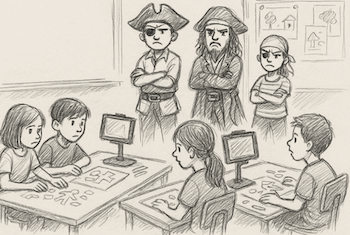
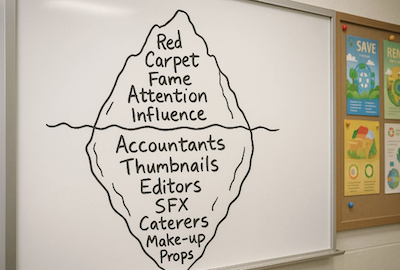
He picks up a marker and draws a big iceberg on the whiteboard. “Behold an iceberg. Up here, above the water line, that’s what people see. The red carpet, the views, the fame, the "influence.

Down here below the waterline is what makes up most of the iceberg: the editors, writers, sound techs, producers, coders, teachers, friends. The late nights. The do-overs. The non-creatives. The people who don’t get credit.”

He writes in all these titles as he speaks. “There are no solo filmmakers. Not on Tiktok or Youtube. Not in Hollywood. Not in this classroom.”

Joe looks squarely at the pirates. “MrBeast, the Ninja Kidz, Ryan Kaji from Ryan’s World. I know what kind of crews they run, the hours they work, the armies behind every upload. The editing teams, lighting techs, thumbnail artists, and analytics geeks who keep their channels alive. Even your favorite influencers—the ones who seem like they’re doing it all solo—are swimming with the same iceberg. None of them make it alone either.”

He turns toward the silent bins. “You’ve built something together. Bowling Ball, Turtle, Rocket, Diaper Texting. Four stories that matter. Courage. Family. Consequence. Responsibility. You invented those stories together.

Right now, you’re at the point every real team hits. The middle. The part where it stops feeling fun and starts feeling lame and impossible.

You’ve seen your story a thousand times and you are not sure it is funny or meaningful anymore.

You are what we call "out in the weeds". You are so busy figuring out the timing, the spacing, the animation, engineering the props, that you lose the big picture.

That’s when people start to drift. That’s when the mutiny starts.”

He steps closer to the front row. “I’ve seen this a thousand times. On sets. In studios. In boardrooms."

Joe takes a deep breath. "Okay, it is time to name drop. I've been the media business for 30 years. Please take me seriously for a moment.

Spielberg’s seen what we are doing here. You know him? The guy who did Jaws, Jurassic World, Indiana Jones?

A few years ago he was visiting an organization that was running this program. He loved it so much he joined their board of directors. What he loved most is that it drags you guys through every role, every job, and explodes the illusion that making meaning with sound and motion is easy.

George Lucas of Star Wars fame has screened one of our movies, just like the ones you are making. He didn’t believe kids did it. He too knows how hard this is. How easy it is to quit. We convinced him otherwise, but he really was skeptical kids could pull this process off.”

He looks around the room, voice steady. “Look, I've spoken to the smartest creative people in governments and universities. NYU, USC, SXSW, Tribeca, in Rwanda and Doha: to sheiks, producers, and billionaires. Do you know what I talk about?

I talk about You." Joe points to the class.

"And the thousands that have come before you. I brag about you,” he says, leaning on a desk. “You’re making positive media, something with a story. A point of view, as a team. Not viral fluff. Not AI slop pretending to be art. Real stories that come from the heart whle learning to trust each other. That’s a miracle. And yes, it’s messy. But it’s the kind of mess the world needs more of.”

He looks directly at the mutineers. “You wanted to make your own movies because you thought you’d lost control. I get it. That happens to the best. But the truth is, no one ever has full control. Not even the geniuses.

Art is compromise in motion. The trick is to make peace with that and still make something great.”

He paces again, voice tightening with energy. “The middle of a project always looks like failure. That’s the price of doing anything real. The professionals feel it too. I’ve seen it on studio lots and ad campaigns and big brand shoots where egos could fill a stadium. It’s always the same. The people who succeed aren’t the ones who never doubt. They’re the ones who finish.

He stops and gestures at the bins. "Bowling Ball has a heart that won’t quit. Turtle moves slow but it moves through tragedy toward love. Rocket burns hot but learns humility. Diaper Texting is a PSA wrapped in laughter. These stories work. They’re honest. They matter. They’re worth finishing.

He glances toward the teacher. She’s smiling now, just watching him work.

Joe lowers his voice. “I don’t come here because I need a hobby. I have a career in the real world. I make campaigns that win awards and projects that reach millions. But this room—this is where the hope is. Because here, you’re still learning the most important lesson in creativity: how to be a team.”

He looks at the mutineers again. “Every team fractures. Every group hits the wall. What matters is what you do next. You come back. You forgive each other. You finish what you started.”

He takes a breath, steady but fierce. “You’ve already done the brave part. You showed up. Now do the real part. Stay.

“I’ve been lucky,” Joe says. “I’ve watched old school influencers like Robert De Niro change a scene when the director insisted, just by breathing differently. I’ve talked musical timing with Wynton Marsalis and Herbie Hancock, talked stop motion with Tim Burton, and swapped story notes with Jim Henson’s Muppet crew.”

He smiles. “I’ve crossed paths with, I don't know, hundreds of big celebrities. Off the top of my head, and these names mean nothing to you, but maybe to your teacher: Kevin Kline, Stanley Tucci, Debra Winger, Idina Menzel, Stephen King, even Mr. Wonderful from Shark Tank. I’ve heard Albie Hecht, the guy who discovered SpongeBob, tell the story about discovering the green goo for Nickleodeon. I’ve seen Jeff Bridges, Clint Eastwood, and Justin Beiber talk about turning chaos into art. Giants, all of them. And every single one, the same thing, working with huge teams in a different way. None of it happens alone.”

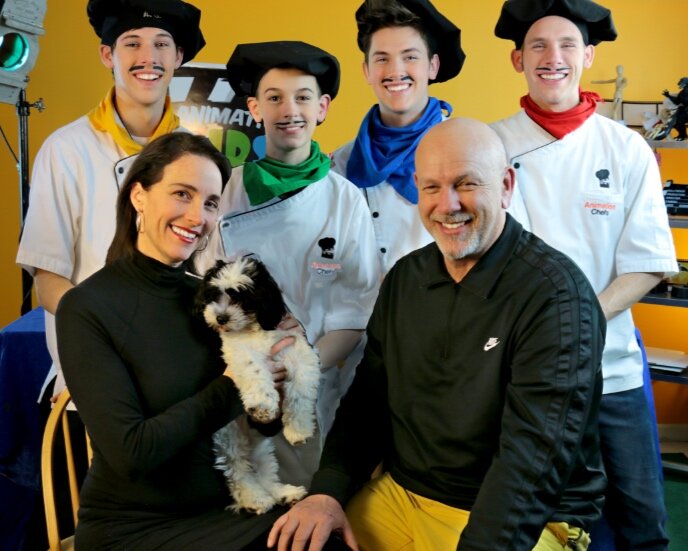
The Animation Chefs, my sons, wanted to quit a hundred of times. Each “Secret Recipe” episode you see took hours of filming, editing, and posting for every single finished minute of content We worked nights and weekends for years just to make five episodes.

And Animating Kids? That took four years. Snow days. Weekends. Holidays. It never interfered with their school work, so we spaced it out. They even did a crowd funding campaign. We also had to build the website, code the purchasing system, design the graphics, upload, and manage the advertising and marketing. The whole kitchen sink.

And yes, I made the Chefs do most of it. I wanted them to live through the trenches, not just making the art, but getting it out there, finding an audience, and showing up for that audience with their best work.

So I’ve seen mutiny before. In classrooms and in my own house. I love my kids, and I always backed off when they were in over their heads. But I also knew the only way through was through. They learned that and are patient with the process as a result.

I love you all too! Only I’m in this classroom a couple of hours a week for a few months. It’s time to own this project again. The mutiny is over.”

No one moves.

Then one of the mutineers exhales, stands, and walks to the Rocket bin. Another follows. Soon the sound spreads: baggies unzipping, paper props rustling, scissors clicking open.

Joe nods once. “Good. That’s what courage sounds and walks like.”

He moves between desks, helping realign iPads and tripods, resetting focus. “One frame at a time. Patience is your superpower.”

The classroom hums again. Tape tears. Paper moves. Voices overlap, not in argument but in rhythm. The teacher folds her arms and lets the sound wash over her.

Joe stands at the front, watching it all. “Look at this,” he says. “A few minutes ago, we were divided. Now we’re a studio again. This is what every real production looks like halfway through. Chaos up top, miracles underneath. You’re the ones keeping it afloat.”

He turns to the iceberg drawing. “When these films are finished and your names scroll across the screen, remember this moment. The day you came back together. The day you learned that creative tension isn’t doom or the end, it’s the spark.”

He lets the moment hang. “This is something AI can’t even do. AI can make pictures. It can mimic. But it can’t make this. The sound of people figuring each other out. The laughter after an argument. The trust rebuilt after a bail. That’s the real art.”

Joe stands by the door, listening to the rhythm of scissors, whispers, and small laughter. The sound of kids forgiving each other, finding their rhythm, building something that didn’t exist before.

He smiles. “This,” he says softly, “is what the future should sound like.”

If this story hits home, forward it to a fellow educator or creative.
Animating Kids is built on the same truth Joe teaches here: creativity is a team sport, and finishing is the real art.

Joe Animates With Kids. The Kids Are Animated1 Animating Kids indeed.

More Testimonials:

"I am impressed by...these programs, providing young people with the skills to become creative and critical thinkers...this shares my dedication to nurturing the next generation of filmmakers and visual storytellers."— Steven Spielberg - Referencing the work of Joe Summerhays“​

"Joe (Animating Kids Founder) has turned the art of movie making for kids into a science.” — Jonathan Demme - Academy Award-Winning Director

“I absolutely love Animating Kids...you have no idea how amazing it is for a span of K-9. I’ve got the whole building covered and my planning was done for me. The kids LOVE the Animation Chefs. Win, win!!”J. Tuttle - Media Specialist

"When I found Animating Kids it changed everything. Small and not so small humans became masters of sound and motion on any subject via small group PBL dynamics."Rachel - Tech Coach - Quebec​

Animating Kids has changed everything! Fun, relevant media-making lessons for kids, and total P.D. for my non-film making teachers. A complete solution!!” — Principal - Bronx NY

​"Animating Kids really helps focus our students during remote sessions…it keeps them so engaged. Your secret recipes are a life saver." — Marisol - Sacramento Ca

"The kids love the demonstrations and it is P.D. for me as I tee it all up. Animating Kids makes me the coolest educator in their lives!" — Charlotte - London UK

"This is the most important skills-based content for today’s kids. I don't think primary educators get how impactful this approach can be. It respects media content creation as the basic literacy it is for today’s kids. — Monique - White Plains NY

“We went through the entire process (PD workshop) of learning animated filmmaking with our tablets and smartphones. We could barely keep up. In the end we came away exhilarated rather than exhausted.” — Cathy S. - Librarian​

"My head was spinning. It involved: math, writing, science, team building, art, language arts, engineering, improvisation, innovation, acting, etc. Along with another dozen areas I can’t recall. Sneaky comprehensive. Mind blown. Can’t wait to use it in class.” — Marcia - 4th Grade Teacher

“Animation Chefs have created a really inspired program! My test group of (hardened gang members) like to laugh at the videos, and they love the simple clear explanations. They just have a blast...”
— G. Zucker Austin TX

"Thank you SO much for sharing your wealth of information and opening this world to every kid! I first learned about you when my husband introduced our daughter to you. Now I am bringing it into my after school program. I’m so psyched!" — Joy H. Retail After School Specialist

"Kids sign-up for robotics, coding, and stop motion sessions. After taking all three, they rate stop motion as their favorite track BY FAR. Animating Kids is key to our success." — Shane V. After School District Lead

Book Excerpt 20: Forward 1.0

I. 2003: Making Kids Fly

In 2003, my media company was hired by a New York arts foundation to “explore filmmaking with children.”
We’d been working with MTV, Disney, HBO Family mocking up projects FOR kids. But suddenly, we had been tasked with finding ways ten-year-olds could make "content" FROM kids. We were way ahead of our time. Before Youtube, Tiktok, Twitter, IG, smartphones & apps.

All the media tools and tech that used to cost as much as a house was migrating into our pockets. Anybody who was paying attention at the time saw it coming like a freight train.

We landed on stop-motion animation: simple, tactile, instantly gratifying. Crayons, paper, scissors, a still camera that looked like NASA surplus. No iPads, no software, just patience and imagination.

We experimented with Legos, clay, toys, and cut paper. Cut paper won. Legos were insanely difficult for small hands. Clay was a mess and difficult to manipulate and rig. Toys were other people's IP and they limited our storytelling range.

So we went with cut paper movies in stop motion. The kids had to cut out their own drawings and bring them to life in a story with a beginning, middle and an end.

Six weeks later, the kids had made three films, while we directed them through the basics of timing and spacing for stop motion. Rough animation, but still - a movie!

Yes, was our answer to our client. Kids making movies could be done. Reimagining stop motion was the ideal way to teach film making in the classroom.

The board's favorite of the three was Jack and Jill.
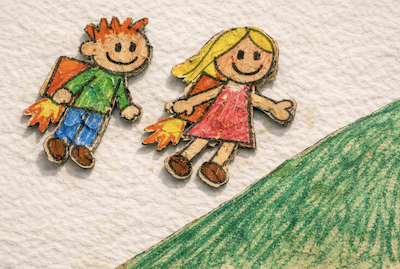
Jack and Jill rocketed up the hill to fetch the pale of water - with jetpacks on. Both crashed in spectacular slapstick fashion. Jack’s jetpack was nicknamed Crown (which he crashed), and Jill twirled through the sky before crashing beside him, cartoon birds circling overhead.

When it screened for the funders and patrons, the room howled. They loved it. The young film makers were invited and they took a bow to a standing ovation. The client had an in to the 21st Century Literacy Summit at George Lucas’s Skywalker Ranch, sponsored by the Edutopia foundation - a gathering of the great minds of media education coming together to formulate a media skills vision for kids in the age of digital video proliferation.

And so began our brush with EdTech visual literacy fun.

Or farce.

II. The Experts Who Blinked

Soon our Jack and Jill movie was screened for an audience of academics and policymakers at Edutopia's 21st Century Literacy conference. A gathering of the self-declared pioneers of the “new literacy” that was being enabled by the democratization of tech migrating into our pockets.

When the lights came up, polite applause. Then during a Q/A: “That couldn’t have been made by children. Who did this really?" Apparently, ten-year-olds couldn’t possibly understand camera angles, rhythm, editing or timing. Word reached us later that the film had been dismissed as “clearly adult-produced” and quietly scrubbed from the conference PDF report. Nice try was the verdict.

That’s when I knew we’d struck gold. Because if the people defining 21st-century literacy couldn’t recognize the solution when "it" danced in front of them- the "it" being actual visually literate kids rocking these digital tools, then they weren’t pioneers - they were tourists with clipboards.

This was years before YouTube, before smartphones, before stop-motion apps. Our kids had done it the hard way — frame by frame, click by click - with a soon-to-be-obsolete camera, and expert adults literally couldn’t see it.

That moment was the birth of Animating Kids. We knew there could be a future in developing a systematic way to teach every aspect of film making, only using age appropriate Disney-esque animation classic rules and stop motion to slow it down to one frame at a time.

It wouldn't happen for another decade, but we knew what we had to do eventually, on the side, while the tectonic plate shift of tech and media platforms developed over the next few years.

III. The Dream and the Grease Factory

In 2003, we believed media tools would soon be as common as pencils. When that happened, every child would need to learn to write and read with them — to produce, interpret, and resist the persuasion of screens.

Get kids behind the magic and show then how all the knobs and dials worked, revealing every trick the Hollywood tool box used for 100 years.

The conferences were electric. “Creativity, Collaboration, Critical Thinking!” The slogans were perfect — and perfectly harmless.

That was the dream.

Then came the think tanks and their "white papers".

Soon the dream ossified into institutional frameworks, rubrics, and funding charts.

The Grease Factory was born — a bureaucratic marvel that hums like a Wonka machine, producing white papers about producing more white papers. You can almost hear it's cogs wheezing:

  • “Reframing Participatory Praxis Through the Semiotics of Transmodal Youth Agency.”

  • “A Longitudinal Inquiry into Algorithmic Resilience and Posthuman Pedagogical Affordances.”

  • “Toward a Holistic Framework for the Reflexive Inculcation of Creative Literacies in Hybrid Ecologies.”

  • “Interrogating Narrative Ontologies: The Matrix of Affective Content Creation Across Emergent Modalities.”

  • “Reconceptualizing the Epistemic Elasticity of Youth-Centered Semiotic Assemblages in Post-Digital Learning Spaces.”

  • “Reimagining Engagement Through Reflexive Modalities of Praxis” just before lunch.

​You know - grease!

IV. The Ideological Hijack

Then almost every “media ed” conference session started hijacking mediaEd for themes. We kept hearing: “You can inject visual literacy into your curriculum if the kids make movies about climate change, equity, or indigenous awareness.”

Translation: We’ll permit media production with kids as long as it is on a worthy topic. No imagination for imagination’s sake.

That’s not literacy; that’s propaganda rehearsal. It’s like “You can only use this pencil to write thing that fit our message.”

Meanwhile, our students proved that kids thrive when they drive. When their wild ideas fuel their projects, they light up. When adults hand them “approved issues” and matrices, they go limp. Hence our storytelling in Animating Kid’s process stays silly and improvisational to this day.

Animating Kids animates kids by freeing them to imagine. Assigning kids subjects anesthetizes them.

But we get ahead of ourselves. Back to 2005. We were funded to do about two school years worth of testing and piloting. Get some milage under this visual literacy vehicle. When it came time to launch our pilot into the real world, our client chickened out on actually teaching animation to kids.

They opted for a "animator in residence" program instead, where an official "working animator" would oversee the process. I reluctantly wrote and designed that program. It was a demoralizing exercise. I knew kids could develop actual skills. But no, despite our protestations that kids could actually learn animation via stop motion, the training wheels stayed on while the adult in the room with "expertise" ran things.

We recruited professional animators who had a love for education. It worked fine, but they really were doing a lot of the animation. Ironically proving the point made by the 21 Century Skills conference years earlier. "Done by an adult!"

I was a "resident" here and there during the early years of the program. When I had a chance to take a class, I had the kids run everything. I was the hearder in residence. And I took notes. I developed a list of all the skills I'd have taught had I empowered these kids with the actual theory and first. principles of animation and storytelling.

The kids made movies with alacrity. To funders, this whole exercise was "hight tech". To the kids, tech was infrastructure. Non threatening. In their wheel house. I just had to nudge here and there.

My own kids were guinea pigs as we developed and tested whether this film making thing could even be a thing way back 2003. I tested everything on them before we piloted ideas with classroom kids.

I told them I'd like to go forward and do skills based series about kids learning the stop motion skills. This would not be in schools, but rather online. A stop motion Youtube channel with my kids producing their own lessons to teach the secrets of animated story telling - a by kids, for kids thing.

They'd spent their wad on the "animator in residence" program and were happy to let me go off and do my vision. I had no non-compete. After they gave their blessing we started building a studio in our basement.

Within two years, my boys were walking the red carpet at the Tribeca Film Festival, having produced an animation that caught the eye of the founders of Tribeca Film Festival. We soon had 60K twitter followers, and we were inundated with requests for how we did it with such young kids.

V. From Jetpacks to Chefs

From 2007 to 2014, our family ran a YouTube channel that was a cooking show format like Iron Chefs. A giant pot of random items poured out onto kitchen table each episode. My boys dressed like chefs had to cook up an animation that brought the items to life with an animated story. Kids teaching kids how to tell stories through animation. They were (are) the Animation Chefs.

Animation Chefs soon spread to 20 countries, took us to Rwanda and Qatar, New York and SXSW and was a real hit.

We also started an after school film school in our community, and finally the Animation Chefs were making money doing stop motion. Youtube never paid anything at that time.

By 2015, we stopped the Youtube channel, did a crowd source funding campaign, and created Animating Kids. We plowed a lot of time, sweat, tedious lesson creation and love into amassing all our experience from years of creating content for fun. 4 years later? Animating Kids

Twenty thousand students later, that we know of, can spot an L-cut from a J-cut, a close-up from a slow burn. They understand that camera angle equals attitude, that rhythm carries meaning, that stories move people because people emote.

Our acolytes are quite literally, 21st-century literate.

VI. What the Experts Still Don’t Get

They make frameworks. We make films.
They predict the future. Our kids already edit it. We are 1/4 of the way into the 21st Century, and we still don't have any standards or interest in teaching kids the magic of movie or video persusation. At least in the US. Canada and Western Europe are light years ahead of the US.

So we carry on - quietly, stubbornly, joyfully.
Every cutout, every click, every burst of laughter is an act of rebellion against the Grease Factory.

Our metrics are laughter per minute and curiosity per frame of content.
Our ROI is wonder.

VIII. The Final Frame

Two and a half decades after the George Lucas kick-off, media education flew up the hill in jetpacks, lost control, and crashed spectacularly - a brilliant launch, comic midair confusion, hard landing.

We've had a front row seat.

We’ll keep teaching kids to fly their own jetpacks — to use sound, motion, and story to make sense of their world — while the Grease Factory keeps producing grease about grease production.

Because somebody has to make meaning while the rest make meetings. Industry is happy to raised a generation fluent in posting but illiterate in persuasion.

And in the end, the only real literacy worth fighting for is the one that moves the kids. Stories in motion equals emotion.

Thank you for coming along for the ride.

Joe Animates With Kids. The Kids Are Animated1 Animating Kids indeed.

More Testimonials:

"I am impressed by...these programs, providing young people with the skills to become creative and critical thinkers...this shares my dedication to nurturing the next generation of filmmakers and visual storytellers."— Steven Spielberg - Referencing the work of Joe Summerhays“​

"Joe (Animating Kids Founder) has turned the art of movie making for kids into a science.” — Jonathan Demme - Academy Award-Winning Director

“I absolutely love Animating Kids...you have no idea how amazing it is for a span of K-9. I’ve got the whole building covered and my planning was done for me. The kids LOVE the Animation Chefs. Win, win!!”J. Tuttle - Media Specialist

"When I found Animating Kids it changed everything. Small and not so small humans became masters of sound and motion on any subject via small group PBL dynamics."Rachel - Tech Coach - Quebec​

Animating Kids has changed everything! Fun, relevant media-making lessons for kids, and total P.D. for my non-film making teachers. A complete solution!!” — Principal - Bronx NY

​"Animating Kids really helps focus our students during remote sessions…it keeps them so engaged. Your secret recipes are a life saver." — Marisol - Sacramento Ca

"The kids love the demonstrations and it is P.D. for me as I tee it all up. Animating Kids makes me the coolest educator in their lives!" — Charlotte - London UK

"This is the most important skills-based content for today’s kids. I don't think primary educators get how impactful this approach can be. It respects media content creation as the basic literacy it is for today’s kids. — Monique - White Plains NY

“We went through the entire process (PD workshop) of learning animated filmmaking with our tablets and smartphones. We could barely keep up. In the end we came away exhilarated rather than exhausted.” — Cathy S. - Librarian​

"My head was spinning. It involved: math, writing, science, team building, art, language arts, engineering, improvisation, innovation, acting, etc. Along with another dozen areas I can’t recall. Sneaky comprehensive. Mind blown. Can’t wait to use it in class.” — Marcia - 4th Grade Teacher

“Animation Chefs have created a really inspired program! My test group of (hardened gang members) like to laugh at the videos, and they love the simple clear explanations. They just have a blast...”
— G. Zucker Austin TX

"Thank you SO much for sharing your wealth of information and opening this world to every kid! I first learned about you when my husband introduced our daughter to you. Now I am bringing it into my after school program. I’m so psyched!" — Joy H. Retail After School Specialist

"Kids sign-up for robotics, coding, and stop motion sessions. After taking all three, they rate stop motion as their favorite track BY FAR. Animating Kids is key to our success." — Shane V. After School District Lead

Book Excerpt 19: Tolstoy Vs TikTok

TikTok vs. Tolstoy

Leo Getting Dopamine Hits

“Why do we have to make stories?” a boy asks, scissors dangling in his hand. “Why can’t we just film something random—like dropping the camera out the window—and have someone catch it? That would get a million views.”

The room perks up. Someone else adds, “Or an AI cat video.”

“Or prank videos,” another suggests, already laughing at the idea. “Like sneaking up and dumping slime on someone’s head. That’s way easier than cutting out all these little pieces.”

Joe leans against a table, smiling as the suggestions pile up. “Those are good ideas,” he says. “But let me ask you, if you drop a camera and someone catches it, what’s the story?”

The room pauses. A girl shrugs. “It’s funny?”

“Sure,” Joe nods. “Funny for a second. But then what?”

“Do it again,” a boy says.

“Exactly,” Joe says. “You’d have to keep doing it, over and over. Because it doesn’t build into anything. Same with cats falling off counters, or pranks, or explosions. They give you a jolt, and then they’re done. It’s like a joke. Quick laugh, move on.”

He has their attention.

And what if you go see a movie like Avengers' Endgame and in the first minute Thanos snaps his fingers and everybody disitegrates into dust. The end

One of the kids, still trimming a paper figure, raises an eyebrow. “But stories take forever. You have to plan them, cut out all the parts, move them frame by frame. That’s harder.”

“That’s true,” Joe says. “But here’s the difference: they connect. A story makes you feel something, and it pulls you in. Random clips and jokes make you laugh, but stories make you care.”

“Jokes hit quick. Stories hold on.”

“But TikTok is more entertaining,” a girl says, sliding her cutout across the paper background. “I can scroll for two hours and not get bored.”

Joe nods. “Sure. TikToks are like jokes: fast, punchy, designed for a quick hit. Some are really clever, and you remember them like you remember a good one-liner. Some are just about the creator "posing" for the world. It's all about them. All attitude. Selfish.

But a story is different. A story is generous. A story enriches. It grows. You feel something, you see yourself in it, and you carry it with you.”

A boy in the back crosses his arms. “But what if I don’t want to feel something? What if I just want the laugh?”

“Fair,” Joe says. “We all need laughs. But if all you ever do is chase quick hits, it’s like eating candy all the time. Sweet, sure, but it wears out fast. Stories are meals. They stick to your bones. They fill you up in ways that last.”

“Highlights are dessert. Stories are the meal.”

“But influencers get rich off the jokes,” one girl argues. “Millions of followers. Millions of dollars.”

“True,” Joe says. “Stories are different. Stories don’t just make you laugh, they make you belong.”

The scissors slow. The kids think about it.

"Like Leo's Stories", Joe chides.

"Leo DiCaprio?" asks an animator.

"No, Leo Tolstoy." Joe offers. "Leo wrote one of the longest books in history and it's been made into movies a half a dozen times. One I saw was something like 6 or 7 hours."

'Like Game of Thrones?" asks another.

"Yes, kinda like the OPPOSITE of a Tiktok video." Joe laughs. "It took me about a year to read his longest book, but it was so worth it."

He gestures around the room.

“Your turtle movie wouldn’t matter if the mom just appeared in the hole in the ice, no lead-up of how she got there or why.

Your bowling ball movie would be flat if it only showed the pins falling, no drama of all the gutter balls.

Your diaper movie wouldn’t be funny if you skipped the texting humor and just showed it getting hit by a car.

Your rocket movie wouldn’t land if the boy was just lost in space with no setup of stealing the rocket.

The setup and the conflict are what make the ending matter. Without them, it’s just a punchline.”

Joe pauses, then shifts gears.

“Do you all know about the Star Wars section of Disney World?"

Nobody had been yet, but they had all heard about it.

"I had a business meeting in Orlando a few years ago. They took us over to ride Rise of the Resistance. Youtube it! It's quite a thing." he scribbles it on the white board.

"Disney is great at folding a story around their rides. This one's is about how you’re recruited by the Resistance, captured by the Empire, herded into a room of stormtroopers, given a mission by Rey, escape prison, and finally end up in a gigantic galactic space battle.

The day we went, the ride broke down. When it restarted, the staff waved everyone straight into the ride vehicles, passing up all the set up: no reading all the displays and artifacts in the rebellion's cave maze, no secret plans from Rey, no stormtroopers, no capture. no prison. Just plonked us in the ride vehicle and we did the final battle and escape."

He pauses.

“It was fun, But over in a flash. No buildup. No anticipation. No idea why we should care. It was like starting a movie in the middle. No first act, no setup, no context. Major disappointment. My mind wasn't in it.”

The class leans in. They get it.

“No setup, no payoff.”

Joe smiles. “Much of the media out there is just the main hill on a rollercoaster. Over and over. Fun, yes, but if all you ever have is tummy tickles non-stop, even the thrill gets dull." Joe pats his yawning mouth with a palm.

"Stories give you the climb, the view from the top, the twists, the surprise ending. That’s why we’re here—to learn how to build the whole ride.

The room is quieter now, just the snip of scissors and the click of cameras capturing another frame as they listen.

Joe presses on.

“Animating Kids isn’t just about making paper movies,” Joe says. “It’s about learning a secret language. Humans have been whispering it since forever—cave paintings lit by fire, doodles in margins, even PowerPoint slides your parents groan through. We’ve always used pictures to tell stories. Now we’ve added motion and sound. Same language, just louder.”

He picks up a cutout and wiggles it. “These scraps? They’re letters. Move them one frame at a time—you’re spelling. A little more—you’ve got words. Enough of them—you’ve written a sentence. Soon, a whole story. Instead of a keyboard with text, you’re writing with moving pictures. In a world swimming with movies, YouTube, TikTok, and ads the trick is: don’t just eat what’s handed to you. Learn to cook.

The kids glance at their projects differently now. A turtle. A bowling ball. A diaper. A rocket. They don’t look like scraps anymore. They look like language.

"Look, through all of it, the rhythm is the same: setup, conflict, resolution. Beginning, middle, end. You want to hook your audience and take them on a meaningful ride. Not like the one I went on at Disneyland.”

He paces.

"A wide shot. A close-up. A cut. A reveal. Every choice changes meaning. Once you learn how to make those choices, you start seeing how they’re made for you in every piece of media you consume. You'll know what they are trying to do. That’s power. That’s literacy.”

He stops. “Jokes are fine. TikToks are fine. But if that’s all you can make, you’re stuck with the quick hit. Learning storytelling gives you the bigger canvas. It’s how you connect, how you inspire, and with animation it's how you make something totally unique with your own visual voice.

The class breathes it in.

Joe pipes up. "Knock knock.

–Who's there?

Your Pose.

–Your pose who?

Your pose to be animating, get back to work!"

Groans.

The scissors start snipping again, the cameras click forward, and the turtle, the bowling ball, the diaper, and the rocket all move into existence one frame at a time.

More Testimonials:

"I am impressed by...these programs, providing young people with the skills to become creative and critical thinkers...this shares my dedication to nurturing the next generation of filmmakers and visual storytellers."— Steven Spielberg - Referencing the work of Joe Summerhays“​

"Joe (Animating Kids Founder) has turned the art of movie making for kids into a science.” — Jonathan Demme - Academy Award-Winning Director

“I absolutely love Animating Kids...you have no idea how amazing it is for a span of K-9. I’ve got the whole building covered and my planning was done for me. The kids LOVE the Animation Chefs. Win, win!!”J. Tuttle - Media Specialist

"When I found Animating Kids it changed everything. Small and not so small humans became masters of sound and motion on any subject via small group PBL dynamics."Rachel - Tech Coach - Quebec​

Animating Kids has changed everything! Fun, relevant media-making lessons for kids, and total P.D. for my non-film making teachers. A complete solution!!” — Principal - Bronx NY

​"Animating Kids really helps focus our students during remote sessions…it keeps them so engaged. Your secret recipes are a life saver." — Marisol - Sacramento Ca

"The kids love the demonstrations and it is P.D. for me as I tee it all up. Animating Kids makes me the coolest educator in their lives!" — Charlotte - London UK

"This is the most important skills-based content for today’s kids. I don't think primary educators get how impactful this approach can be. It respects media content creation as the basic literacy it is for today’s kids. — Monique - White Plains NY

“We went through the entire process (PD workshop) of learning animated filmmaking with our tablets and smartphones. We could barely keep up. In the end we came away exhilarated rather than exhausted.” — Cathy S. - Librarian​

"My head was spinning. It involved: math, writing, science, team building, art, language arts, engineering, improvisation, innovation, acting, etc. Along with another dozen areas I can’t recall. Sneaky comprehensive. Mind blown. Can’t wait to use it in class.” — Marcia - 4th Grade Teacher

“Animation Chefs have created a really inspired program! My test group of (hardened gang members) like to laugh at the videos, and they love the simple clear explanations. They just have a blast...”
— G. Zucker Austin TX

"Thank you SO much for sharing your wealth of information and opening this world to every kid! I first learned about you when my husband introduced our daughter to you. Now I am bringing it into my after school program. I’m so psyched!" — Joy H. Retail After School Specialist

"Kids sign-up for robotics, coding, and stop motion sessions. After taking all three, they rate stop motion as their favorite track BY FAR. Animating Kids is key to our success." — Shane V. After School District Lead

Book Excerpt 18: My T-Rex On The Wall

How a T-Rex jumpstarted a creative life

The classroom was alive in that particular way creative spaces are. Not noisy exactly, but busy. The kind of hum you get when scissors are snipping, pencils are scratching, tape is tearing, and a dozen different little debates are breaking out across the room:

It was chaos, but the good kind — the chaos of things being invented.

In the middle of this, a boy glanced up from his storyboard and asked, “Why do we even need to learn animation? I mean… AI can just do it all for us, right?

The chatter dipped. The question hung in the air like chalk dust. Everyone was thinking it; he’d just been the one to say it out loud.

Joe smiles. “That is an excellent question. And to answer it, I want to tell you about the first time something like AI blew my mind.”

Joe perches on the corner of a desk.

“When I was in third grade, we were studying dinosaurs. I loved to draw dinosaurs. and I'd sketched a Tyrannosaurus Rex — enormous teeth, tail lashing, claws, all the scales. Ms. Penny, my teacher, loved it.

"I'll be right back." She snatched it off my desk and walked out of the classroom.

At the time I thought I knew exactly what she was doing, she was going to the mimeograph machine, the ancestor of a copy machine. If your drawing got mimeographed, it felt like you’d been published. You were official.

Back then, we lived for the smell of mimeograph ink. The copies came back wet with purple ink - the smell of that ink I can still conjure up in my mind today. But I digress. It was exotic tech back then.

But Ms. Penny didn’t come back with that sweet toxic mimeograph. She came back with something I’d never seen before — a clear sheet of plastic called a transparency. She laid it on an overhead projector, flipped the switch, and suddenly — there it was. My dinosaur sketch was glowing on our classroom movie screen.

The whole class gasped. Ms. Penny grinned. And me? I was thunderstruck.

"I wanted to highlight Joey's T-Rex drawing with our new transparency machine." Ms. Penny gushed.

It caught all of us completely off guard. We'd never heard of one. And we had one in our building? Cool!

It wasn’t just the fact of my drawing on the screen that blew our minds, but the speed with which it had arrived. That T-Rex had gone from my brain, to my fingers, to my pencil, to the paper, to that wall — all in one class period. Imagination magnified in light in almost real time.

It felt like the future was on that screen. Every much as astonishing as AI is today!”

Joe pauses to let it sink in.

“Now here’s the important part. The idea had to come from me first. The machine just made it bigger, faster, brighter. ”

Some kids were nodding now. A girl in the back raised her hand. “So AI is like the projector?”

“We might think about it that way,” Joe said. “It’s dazzling, and it changes how fast we can share what’s in our heads. But just like that projector, it needs your dinosaurs, our ideas, your stories. Otherwise, it’s just light on a wall.”

Joe leans forward a little.

And that’s why you’re here, cutting out characters, drawing storyboards, nudging paper figures frame by frame. Because animation isn’t just about making pictures move.

He leans back and shoots his index fingers to his temples. "It’s about creating a story in here. And you are learning a language, the language of sound and motion to get it from in here to up there. You are making meaning with that language!"

"You mean learning a language?" a young girl asks.

"Yes, that is basically it. You’re practicing words that have been part of the craft of film making for a hundred years: squash and stretch, to make things feel alive. Anticipation and follow-through, to make actions believable. Overlapping action, to keep motion fluid and real. They’re the grammar of movement, the vocabulary of visual storytelling.

And here’s a secret: AI already knows these rules. The people who built the models taught it what animators figured out long ago. Which means the more you practice them yourselves, the better you’ll be at prompting, guiding, and shaping stories with AI. You’ll know the secret words to say. You’ll know them not because you read them in a manual, but because you’ve felt them in your own finger-tips."

"Like when we had to write out the whole alphabet in kindergarten?" a young voice injects without looking up from their animation.

"Yes! Exactly! Precisely! Joe jumps up in agreement.

"By writing things out you learned not only letters, but how to then write words, and also how to read better too! But now it's the grammar of movement, the alphabet of motion.

Joe pauses. "What a world we live in. Truly. A world where your imagination collides with machines that can spin your sketches into films in seconds, where stories can leap from your head onto a glowing space without ever touching paper. It’s dazzling, almost unbelievable."

"What comes after AI?' a young mind wonders aloud.

Joe smiles at the young futurist.

"Even if one day we skip past AI entirely — use chips in our brains, or telepathy itself, where stories come into our minds with some exotic tech, like dreams on demand — the task will remain the same. Someone will still have had to shape those stories, give them rhythm and sense and make meaning from the sparks that flash in our heads."

A collective "Whoa!" rings out from the animation tables.

"Every leap forward — from my transparency on the overhead projector to AI, from film reels to streaming, from cave paintings to whatever comes next — is really just another way of doing the same ancient work: making meaning." Joe prophesies.

He let's a global pause settle in on the class.

Slowly the hum of scissors, the tape, the pencils, the whispered arguments about timing and spacing restart., The future of storytelling isn’t waiting in some distant lab. It’s here. For Joe, it started in the glow of his dinosaur in a classroom wall decades ago, and now he is sharing the same astonishing dynamic, with newly minted animators, storytellers really, using the latest tech to make their dinosaurs move and growl! We are in the business of making meaning.

"But what about Tiktok? Is that about meaning too?" blurts out a young digital citizen over his shoulder.

"Next time, next time. We are behind with all my mimeograph ramblings today, Let's catch up on these scenes," Joe answers as he dreads the next visit.

More Testimonials:

"I am impressed by...these programs, providing young people with the skills to become creative and critical thinkers...this shares my dedication to nurturing the next generation of filmmakers and visual storytellers."— Steven Spielberg - Referencing the work of Joe Summerhays“​

"Joe (Animating Kids Founder) has turned the art of movie making for kids into a science.” — Jonathan Demme - Academy Award-Winning Director

“I absolutely love Animating Kids...you have no idea how amazing it is for a span of K-9. I’ve got the whole building covered and my planning was done for me. The kids LOVE the Animation Chefs. Win, win!!”J. Tuttle - Media Specialist

"When I found Animating Kids it changed everything. Small and not so small humans became masters of sound and motion on any subject via small group PBL dynamics."Rachel - Tech Coach - Quebec​

Animating Kids has changed everything! Fun, relevant media-making lessons for kids, and total P.D. for my non-film making teachers. A complete solution!!” — Principal - Bronx NY

​"Animating Kids really helps focus our students during remote sessions…it keeps them so engaged. Your secret recipes are a life saver." — Marisol - Sacramento Ca

"The kids love the demonstrations and it is P.D. for me as I tee it all up. Animating Kids makes me the coolest educator in their lives!" — Charlotte - London UK

"This is the most important skills-based content for today’s kids. I don't think primary educators get how impactful this approach can be. It respects media content creation as the basic literacy it is for today’s kids. — Monique - White Plains NY

“We went through the entire process (PD workshop) of learning animated filmmaking with our tablets and smartphones. We could barely keep up. In the end we came away exhilarated rather than exhausted.” — Cathy S. - Librarian​

"My head was spinning. It involved: math, writing, science, team building, art, language arts, engineering, improvisation, innovation, acting, etc. Along with another dozen areas I can’t recall. Sneaky comprehensive. Mind blown. Can’t wait to use it in class.” — Marcia - 4th Grade Teacher

“Animation Chefs have created a really inspired program! My test group of (hardened gang members) like to laugh at the videos, and they love the simple clear explanations. They just have a blast...”
— G. Zucker Austin TX

"Thank you SO much for sharing your wealth of information and opening this world to every kid! I first learned about you when my husband introduced our daughter to you. Now I am bringing it into my after school program. I’m so psyched!" — Joy H. Retail After School Specialist

"Kids sign-up for robotics, coding, and stop motion sessions. After taking all three, they rate stop motion as their favorite track BY FAR. Animating Kids is key to our success." — Shane V. After School District Lead

Book Excerpt 17: Stitching Pictures Into Dreams

Kids Hacking Space-Time & Quantum Mechanics

Joe wandered between the tables, hands in his pockets, shoes shuffling softly against the linoleum floor. Around him the kids were busy, huddled over iPads, nudging paper cutouts into position. There was the constant background music of snipping scissors and masking tape loops tacking down props. The room buzzed with a kind of chaotic focus.

He stopped mid-step and leaned his hip against one desk. For a long second he said nothing, just looked at them working, his eyes narrowing as though he were deciding something. Then he nodded slightly, as if giving himself permission.

“You know,” he said, voice softer than usual, “I don’t usually tell this story until you’ve been animating for a while.”

The kids froze, sensing the shift.

“But I think you’re ready,” Joe went on.

He took a deep breath, folding his arms. “Heads up, everyone. Lend me your ears. What you’re doing here—this storytelling with sound and motion—you can’t really understand it by me just lecturing, can you? You’ve got to feel it. Let’s pause and reflect on the power of what you’re doing.”

Now the paper characters hung in midair, the scissors stilled, the room at full attention.

“When I was nine years old,” Joe said slowly, “I saw The Jungle Book. Disney’s hand-animated version. And it didn’t just become my favorite movie of childhood. It became the most powerful movie experience of my life.”

His eyes drifted past the classroom ceiling, seeing something far away.

“For three nights afterward,” he said, “I dreamed myself inside that movie. Not just watching it—I was Mowgli. I was there. I sang and danced with Baloo the bear. With the Louis, the king of the swingers, and all characters. I floated down the river, lying on Baloo's belly like a raft. I stared into Shere Khan’s yellow eyes. I met the girl from the village.”

The class was rapt.

“And each night, when I fell asleep, my dream picked up exactly where the last one had left off, and then paused until the next night. I mean—I was there! Baloo was waiting for me when I fell asleep!”

Then suddenly his eyes twinkled.

He puffed his belly out until it bulged like Baloo’s, and began to sway side to side in an exaggerated waddle. His voice dropped into a half-growl, half-croon:

🎵 “Look for the bear necessities, the simple bare necessities…” 🎵

The kids immediately started giggling.

🎵 “The… um… the simple… bear… what is it—forget about your worries and your—something, something strife…” 🎵

Joe stomped a foot, swung his arms like Baloo slapping his belly, and bellowed, 🎵 “With just the bear—neces…si…ties of liiife!” 🎵 He let his voice crack on “life” for comic effect and twirled in a ridiculous little jig, nearly losing his balance.

The kids howled. A few joined in, trying to mimic Baloo’s bumbling sway.

Joe threw up his hands in mock defeat. “See? I don’t even remember all the words. But I remember the feeling. The joy. That’s what got into my nine-year-old brain. First night, Baloo and I danced and sang, then floated down the river. Night two, same river, only farther along, Baloo snoring, my toes dragging in the water, then off to other adventures swinging through the ruins with Louis the orangutan. Night three, chased by Shere Khan the tiger and then into the village, meeting the girl.”

He paused, frozen in his pose. “Then night four—nothing. It was over. I was so sad. For a week I went to bed every night trying to induce that magical experience. But it was gone.”

He swallowed, the memory tugging at his throat. “That has never happened to me before or since. A dream that spanned 3 nights. Only with that story. That animation. Only at that age. But it changed me. Now I have four boys and they’ve all heard me sing ‘bare necessities’ as their bedtime lullaby theme song as they grew up.”

He let the silence stretch. The kids didn’t move.

“When I grew up,” Joe continued, “I met someone who’d worked with the animators who did The Jungle Book. They’re all gone now. But this mentor talked to them and took notes—fifteen notebooks full of their animation secrets. He let me study these notebooks. He showed me how animation actually works. I was blown away. The mechanics. The math. The precision needed to make drawings move. The frames-per-second and tiny spacing changes that mean the difference between slow and fast, believable and silly. All this technical stuff you are learning.

"And —” he spread his hands— “out of all that calculation came a living story so powerful it reached into my nine-year-old dreams for three nights. And then affected my behavior for the rest of my life. Think about that.”

He bent slightly, catching his breath. “I've done a lot of creative jobs in my life, but by far my favorite has been reimagining and migrating almost all of those rules into your classroom and others. These sessions have a direct line to the Jungle Book. And the basics are all here in Animating Kids. It’s all there. Those ancient animators’ knowledge has trickled down directly into this classroom, only you have something they didn't. A computer or phone or iPad with cameras and the internet to share your animations with the world. If those old Jungle Book animators were here today and could see what you have at your fingertips, they’d be very jealous!”

He looked around the room. “But here’s the thing: the magic only works because these animators respected the rules. If Baloo’s mouth hadn’t matched the song, if Mowgli danced too slow or Shere Khan crept too fast, the dream would’ve collapsed. These glitches would have come on stronger then the story. The mechanics matter—but only because they served the story.

He looked around, eyes serious now. “That’s what I want you to grasp. These rules we are learning—timing, spacing, and sound—they help you get the mechanics out of the way so your audience can live in your story. That’s why we built Animating Kids the way we did. To give you the secret recipes—blinks in three frames, walks in fifteen, spacing small for slow motion, wide for speed. The basics. That’s where you have empathy for your audience. You want them to not see the mechanics. You want them to see, to feel, your story.”

"Speaking of mechanics." Joe straightened up, then walked to the counter and lifted a battered black cylinder.

“You know what this is?” he asked.

A girl squinted. “A… drum?”

Joe smiled. “Close. It’s a zoetrope. One of the earliest animation machines, if not THE earliest. Before movies. Before electricity.”

He held it up so they could see. “This was invented in the 1830s by a man named William George Horner. He called it a ‘daedaleum.’ Fancy name. Later, people renamed it ‘zoetrope,’ which means ‘wheel of life.’ And that’s exactly what it did. For the first time in human history, people saw drawings move. Imagine that.”

He paused. “For thousands of years, humans drew pictures—cave paintings with motion lines, runners on vases, carvings of walking figures on temple pillars. But they were always still. Then, one day, people looked into this spinning drum, and suddenly… boom! Motion. A horse running. A man skipping rope. A bird flapping. The first time anyone ever saw a series of still drawings come alive.”

He slid a strip of paper into the zoetrope. Fifteen sketches of a running man circled the inside.

“Lights, please.”

Someone flicked off the switch. The room dimmed, one overhead beam pooling light down into the zoetrope. Joe spun the drum.

“First, look from the top.”

The kids peered down. The images blurred, fuzzy blobs of running figures whipping around inside the cylinder.

“Now lower your eyes and look through the slits.”

Gasps. A chorus of wows. “He’s running!” one boy shouted.

Joe grinned. “Exactly. That blur of sketches became a runner the moment you saw it in bursts—tiny packets of light through those slits in the spinning cylinder. Your brain smears the images when they whirl by all at once, but create short flashes, strobes, and you eyes tell your brain to stitch them together into motion.”

A girl tilted her head. “How?”

Joe raised an eyebrow. “Great question. Scientists call it persistence of vision. That’s why you still see a sparkler’s trail in the air, even after it’s gone. Or why you can wave your hand fast and it looks like there are six of them.”

Joe points out the window. Stare out there at that tree for about five seconds." The class turns and collectively looks outside the window at a lone tree.

"Now, close your eyes and tell me what you see!" Joe challenges.

"A ghost of the window!" yells one kid. "For about three seconds! and then it disappears“.

Joe interjects, "That is persistance of vision. Even when you close your eyes, what you look at "persists" for a bit. In the Zeotrope, those slits "blink" your eyes while your brain is holding on to the old picture while the new one arrives. If those bursts come just right, the brain blends them into motion." Joe says.

He tapped the zoetrope. “That’s a "quanta" or "packet" of light. One burst, one frame, one moment. Then another. Then another. Your brain does the rest. But the grand secret is that for your to see invented motion on a screen, it needs to be chopped into little bursts of light.”

The kids were spellbound.

“And here’s the kicker,” Joe said. “That’s still how it works today. Every movie, every video game, every TikTok clip, every ESPN highlight—frame after frame, packet after packet. Your whole screenager lives are run on frames-per-second. Nothing’s changed since 1834. It’s all just better disguised.”

A boy frowned. “So if I look down the top again…”

Joe spun the Zoetrope again. The boy peered in, shook his head. “Still just a blur.”

"Aren't the mind and the eyes connected in mysterious ways?" Joe asks.

A lot of nods.

"Fifteen frames a second is what we’re working at. Twenty-four frames is what they usually use in the movies. Thirty for TV. Sixty and up for games. It’s all just tricking your brain with the right rhythm of light packets. Honestly? All of this—the timing, the spacing, the rhythm—is the same territory Einstein and the quantum physicists went exploring later. You’re not studying equations yet, but you’re playing with the same mysteries of space and time and light.”

He clapped once. “Funky, right?

The kids nodded eagerly.

“Alright then,” Joe said, “let’s talk spacing and time. Turtle Group—your mama turtle scene?”

Groans erupted.

Joe held up the Turtle Group’s iPad and hit play on scene three.

“Right now, mama turtle’s moving at freeway speed. She’s supposed to be slow, worried, looking around for Junior, remember?”

He beckoned. “Up front. I need volunteers. I need a turtle, a director, and a timer.”

Hands shot up. Shaniqua became the timer, Daquan the director, Juan the turtle.

“Juan is going to get down on his hands and knees and act out this scene for real. He is going to look worried, walk slowly like a turtle, and call out for her baby. You got it Juan?”

Juan immediately dropped to his hands and knees, already wobbling his worried head dramatically to spontaneous laughs.

“Shaniqua, start tracking the seconds on the clock when Daquan gives you the cue! Juan, you start walking when the director says…”

Joe turned to Daquan. “What do directors say?”

Daquan grinned, puffed his chest, and shouted, “Lights! Camera! Action!

Juan crawled across the floor slowly, dragging his knees, wobbling, calling in a grandmotherly falsetto, “Junior! Juuuunior! Where are you, dear?”

The class erupted.

“Cut!” Daquan yelled, and Juan hopped up off the floor, brushing dust off his jeans while he bowed to immediate applause.

“How long?” Joe asked.

Shaniqua checked the clock. “Eight seconds!”

Joe beamed. “Eight seconds. At fifteen frames per second, how many frames is that?”

A chorus of muttering. Fingers counted. Finally, two kids shouted together: “One hundred twenty!”

“Exactly,” Joe said. He tapped the iPad where the turtle animation lived. “But you only shot fifteen on your first attempt. That’s why she looks like a race car."

Groans. “Do we have to reshoot it? 120 pictures will take foreeeeevvveer.

“Welcome to Hollywood,” Joe said cheerfully. “Reshoots happen.

The kids laughed and groaned at the same time.

“Alright,” Joe said, clapping once. “Now here’s what I want everyone to do. Go back to your projects. Find the scene that looks weird—too fast, too slow, too choppy. Every one of you has one. You know the one I mean. The one that bugs you when you watch it back.”

The room filled with nervous laughter.

“I want you to act it out. Pick a director, a timer, and an actor. One of you is the character, one is keeping time, one is calling the shots. Perform your scene in real life. See how long it really takes. Then do the math: fifteen frames per second. How many pictures will you need to get it right?”

A buzz swept the room as kids returned to their clusters. Chairs scraped. Stopwatches appeared on phones. Paper cutouts were set aside while students stood in to play their characters.

From one corner, a director shouted, “Lights! Camera! Action!” and a girl pretended to sneak across the floor, as if she were going to steal a rocket. Her partner timed her while the third kid called out, “You’re walking too fast! Slow down!”

Across the room, a kid was mock-bowling in exaggerated sliding steps. “Wait, wait!” their timer yelled. “That was only two seconds. At fifteen frames per second, that’s thirty pictures! No wonder it looks like he’s teleporting!”

Laughter erupted.

Joe moved from group to group, listening, correcting, encouraging.

“Good, good. Count it out. How many frames for that door to creak open? Five seconds? That’s seventy-five pictures. Worth it? Maybe. Maybe not. You decide.”

Near the back, two boys argued.

“It’s fast!” one insisted.

“No, it’s slow!” the other shot back.

Joe leaned in. “Settle it with a stopwatch. That’s what the pros do. Hollywood directors don’t guess. They test.”

The room became a patchwork of little film sets, each one alive with commotion. Their new appreciation for the mechanics of motion ruled.

Students crawled on the floor, staggered dramatically, waved their arms in slow arcs, all while timers shouted seconds and directors barked “Cut!” Laughter rolled like waves across the room.

Joe stood in the middle, turning slowly, taking it in. His heart swelled. This wasn’t kids fiddling with paper anymore. This was kids learning the grammar of motion—the rhythm of time itself.

He raised his voice over the noise. “See what’s happening? You’re discovering it for yourselves. Timing and spacing aren’t abstract rules—they’re real. You can feel them. Fast, slow, jerky, smooth—it’s all about the math, the rhythm, the packets of light your audience’s eyes can handle.”

The kids quieted enough to listen.

“Frames per second matter. It’s all about rhythm. Give the brain the right rhythm, the right sequence and number of "light bursts" and it believes. Break the rhythm, and it doesn’t.”

He clapped his hands. “Funky, right?”

“Yes!” the kids chorused.

Joe says, lowering his voice again, “When you set your timing right, your audience stops noticing the mechanics. They stop seeing cutouts. They start seeing turtles searching for their children. Or bowling balls sad to be gutter balls. Or bears dancing in the jungle.”

He puffed his stomach out again, swayed side to side, and bellowed:

🎵 “The bear—necessities… the simple… uh… bare… something-ities…” 🎵

The class started stomping and clapping along, doing their best-big-belly-bear impersonations.

Joe bent over, laughing at himself, then wiped his forehead. “See? Even when I butcher the words, the rhythm carries it. That’s what you’re after. Rhythm. Timing. Spacing. Get those right, and the story sings.”

He looked around at the flushed, laughing faces, the kids still buzzing with stopwatch energy.

“Do you realize how powerful that is?” he asked quietly. “In this room, you are bending space and time like Einstein! You’re controlling the physics, the quantum mechanics of the universe you've created. And your audience—strangers—will believe you. That’s a superpower.

A hush fell.

“You are pulling the knobs and dials like the Wizard of OZ behind the curtain. These are the secrets. And they are not exotic. Just respect the timing, do the math, shoot frame-by-frame, second-by-second, you’re making stories that will land in people’s heads. Maybe even their dreams.”

He looked around. “I think you get it" He paused. “That’s the marriage right there. The wonder and the math. The mystery and the mechanics. The dream and the stopwatch. That’s the art of animated storytelling.”

Then, with a final grin, Joe puffed out his stomach one last time, shuffled like Baloo, and belted—off-key, half-forgetting the words, but full of joy:

🎵 “Look for the bear—necessities… forget about your worries and your strife…” 🎵

The kids roared, clapped, stomped, some shouting nonsense lyrics along with him.

Joe bowed low, laughing at himself, then straightened. “Alright. Back to work. Lights. Camera. Action. Let’s see some stories worth dreaming about.”

More Testimonials:

"I am impressed by...these programs, providing young people with the skills to become creative and critical thinkers...this shares my dedication to nurturing the next generation of filmmakers and visual storytellers."— Steven Spielberg - Referencing the work of Joe Summerhays“​

"Joe (Animating Kids Founder) has turned the art of movie making for kids into a science.” — Jonathan Demme - Academy Award-Winning Director

“I absolutely love Animating Kids...you have no idea how amazing it is for a span of K-9. I’ve got the whole building covered and my planning was done for me. The kids LOVE the Animation Chefs. Win, win!!”J. Tuttle - Media Specialist

"When I found Animating Kids it changed everything. Small and not so small humans became masters of sound and motion on any subject via small group PBL dynamics."Rachel - Tech Coach - Quebec​

Animating Kids has changed everything! Fun, relevant media-making lessons for kids, and total P.D. for my non-film making teachers. A complete solution!!” — Principal - Bronx NY

​"Animating Kids really helps focus our students during remote sessions…it keeps them so engaged. Your secret recipes are a life saver." — Marisol - Sacramento Ca

"The kids love the demonstrations and it is P.D. for me as I tee it all up. Animating Kids makes me the coolest educator in their lives!" — Charlotte - London UK

"This is the most important skills-based content for today’s kids. I don't think primary educators get how impactful this approach can be. It respects media content creation as the basic literacy it is for today’s kids. — Monique - White Plains NY

“We went through the entire process (PD workshop) of learning animated filmmaking with our tablets and smartphones. We could barely keep up. In the end we came away exhilarated rather than exhausted.” — Cathy S. - Librarian​

"My head was spinning. It involved: math, writing, science, team building, art, language arts, engineering, improvisation, innovation, acting, etc. Along with another dozen areas I can’t recall. Sneaky comprehensive. Mind blown. Can’t wait to use it in class.” — Marcia - 4th Grade Teacher

“Animation Chefs have created a really inspired program! My test group of (hardened gang members) like to laugh at the videos, and they love the simple clear explanations. They just have a blast...”
— G. Zucker Austin TX

"Thank you SO much for sharing your wealth of information and opening this world to every kid! I first learned about you when my husband introduced our daughter to you. Now I am bringing it into my after school program. I’m so psyched!" — Joy H. Retail After School Specialist

"Kids sign-up for robotics, coding, and stop motion sessions. After taking all three, they rate stop motion as their favorite track BY FAR. Animating Kids is key to our success." — Shane V. After School District Lead

Book Excerpt 16: Okay Kids - Out In The Hall

The Voices in the Hall
Joe pushed open the classroom door, grinning. Clusters of kids hunched over iPads, paper scraps littered the floor, scissors migrated like endangered species, and one kid animated while eating Cheetos.

The animations were about seventy percent done. Characters moved, gravity worked—most of the time. Perfection? Absent. But perfection is boring anyway. What mattered was the kids were beginning to own their movies.

Joe clapped. “Congratulations, you’re about to make cinema history. At least in this classroom. Which, let’s face it, is the only history that matters right now. Today we find your voices. Literally.”

Twenty-five pairs of eyes blinked back. Somewhere, a stapler misfired.

“I’ll be pulling groups into the hall,” Joe explained, “to record voice-overs. Remember that dialogue sheet we brainstormed? Full of slang, idioms, and phrases you all found hysterical? That sheet’s been incubating like an egg. And today we crack it.”

A boy whispered, “Scrambled or fried?” Laughter.

“Step one: dig out that sheet. Step two: export your footage into iMovie, in order. Save it. Done.”

He dropped his voice to a grave rumble. “And then… when I call you out into the hall, we record whatever we improvise. On or off the sheet. Because now you know your characters. You’ve lived with them. They’re alive!” He screamed like Dr. Frankenstein.

Gasps. A few flinches. Then Joe, deadpan: “You’re ready to let them speak.”

The kids cracked up.

“So. Who gets to voice which character?”

Silence. A tumbleweed would have rolled by if schools allowed them.

“Okay,” Joe said. “Bowling Ball group—who’s going to be the voice of the bowling ball?”

A girl shot up her hand. “Me! I’ll be the best bowling ball.”

The class erupted.

“That’s not a high bar,” Joe said. “Most bowling balls don’t speak.”

“They do in my head,” she fired back.

“Fair enough. But here’s the deal: if all of you voiced the ball, the audience wouldn’t notice.”

“Yes they would!” she protested.

“Nope. I’ve made a thousand of these films. Nobody can tell. They’re too busy laughing at the bowling ball.”

He spread his arms like a preacher. “So here’s my proposal: four bowling-ball scenes, four voices. Everyone leaves a voice print in the film. Democracy in action.”

The room lit up. Suddenly everyone wanted to voice everyone. Five kids claimed the lead, three volunteered as sound-effect departments, and one asked if they could voice all the trees.

Joe raised a hand. “Relax. We’ll get there. You’ve been making ridiculous noises your whole lives. Now they’re useful.”

He cupped his hands and rattled off a sample: thunder, squeaky hinge, fart. The kids howled.

“Don’t underestimate this,” he said, holding up paper. “Crumpling can be fire, sizzling bacon, or rain. Your brain will believe it. Sound design is just a con.”

“Could it be an alien invasion?” a kid asked.

Joe crumpled dramatically. “Absolutely. Especially if you scream behind it.”

The class obliged, howling alien screeches as Joe shredded the paper.

“Fun fact,” he added. “The sound of lightsabers? George Lucas’s team hit a wrench on a telephone pole wire. And now it’s forever the sound of space swords. That’s what we’re doing—making the ordinary unforgettable.”

One boy produced a perfect horse gallop using only his cheeks. His group instantly named him “Head of Animal Division.”

Joe clapped again. “Bowling Ball group—you’re first. Everyone else, keep animating, review your brainstorms, and be ready.”

He swung the door open like a maître d’. “Ladies and gentlemen, the Bowling Ball awaits.”

The group strutted out, giggling. One whispered, “Do bowling balls have British accents?” Another replied, “Only the fancy ones.”

The Hallway Studio
Out in the hall, Joe set up the iPad like a field recorder. The acoustics were hopeless—hallways are built for echoes, not cinema—but that only made it funnier.

“Okay. Scene one. The bowling ball rolls down the lane, nervous. Who’s up?”

The girl stepped forward, puffed up, and bellowed in a bass rumble: “I am a bowling ball! Fear me!”

Joe nearly dropped the iPad. “Terrifying. Brilliant.”

Next, a boy whispered, “Hi…” like the ball was painfully shy. The group broke down laughing.

“Excellent,” Joe said. “One villain, one introvert. The audience will think it’s nuance.”

Someone sang opera. The hallway echoed with wobbly arias.

Meanwhile, Back in the Classroom
The rest weren’t idle.

“I’ll do laser beams,” one boy sneezed out pew-pews.

“You sound like my grandma,” his partner said.

“Your grandma must be awesome,” came the reply.

At another table, a girl crumpled paper. “Rocket launch.”

Her teammate frowned. “Sounds like potato chips.”

“Then it’s chip-powered,” she said without blinking.

Why This Chaos Works
It looked like pandemonium. It was education at its best: messy, collaborative, unpredictable, loud with laughter.

Kids weren’t just learning film—they were learning to improvise, to experiment, to fail gloriously and recycle the failure into comedy gold.

They learned that squeaks could be thunder, whispers menace, and their squeaky voices could carry a story. They learned creativity isn’t talent, it’s permission, permission to try to be ridiculous, to claim “best bowling ball” without apology.

The Grand Reveal
When the groups played their recordings, the room went silent for three seconds.

It was as if the cutouts had waited all along for their voices. Suddenly they weren’t drawings anymore - they were alive.

Joe had seen this a thousand times. The chaos had worked. The kids were astonished by their own inventiveness. This was what they’d remember, not hours of fiddling with paper arms, but the shock of hearing themselves, ridiculous and brilliant, coming out of characters they created.

Years later, Joe would bump into them—teenagers, college students—and they’d still quote their lines in the same voice they’d used in that echoey hallway. It had grafted itself onto memory.

Straight into their DNA.

Founder of Animating Kids and executive producer of the Animation Chefs webseries, Joe turns filmmaking into a team sport for the content creator generation. Starring his own kids as the “Animation Chefs” with his wife, Holly, as production designer and script supervisor, Animating Kids uses a by kids, for kids cooking-show format to inspire young creators worldwide. Out in the real world, live hands-on workshops with 25,000+ students and educators trained in 20+ countries, Joe equips kids with the storytelling framework and creative vocabulary they’ll need to thrive in the digital age—whether directing a film or prompting an AI. His work proves that visual media literacy is reading and writing with sound and motion—complementing traditional literacy and making media production relevant for the todays kids.

Animating Kids Table of Contents

Video Testimonials

More Testimonials:

"I am impressed by...these programs, providing young people with the skills to become creative and critical thinkers...this shares my dedication to nurturing the next generation of filmmakers and visual storytellers."— Steven Spielberg - Referencing the work of Joe Summerhays“​

"Joe (Animating Kids Founder) has turned the art of movie making for kids into a science.” — Jonathan Demme - Academy Award-Winning Director

“I absolutely love Animating Kids...you have no idea how amazing it is for a span of K-9. I’ve got the whole building covered and my planning was done for me. The kids LOVE the Animation Chefs. Win, win!!”J. Tuttle - Media Specialist

"When I found Animating Kids it changed everything. Small and not so small humans became masters of sound and motion on any subject via small group PBL dynamics."Rachel - Tech Coach - Quebec​

Animating Kids has changed everything! Fun, relevant media-making lessons for kids, and total P.D. for my non-film making teachers. A complete solution!!” — Principal - Bronx NY

​"Animating Kids really helps focus our students during remote sessions…it keeps them so engaged. Your secret recipes are a life saver." — Marisol - Sacramento Ca

"The kids love the demonstrations and it is P.D. for me as I tee it all up. Animating Kids makes me the coolest educator in their lives!" — Charlotte - London UK

"This is the most important skills-based content for today’s kids. I don't think primary educators get how impactful this approach can be. It respects media content creation as the basic literacy it is for today’s kids. — Monique - White Plains NY

“We went through the entire process (PD workshop) of learning animated filmmaking with our tablets and smartphones. We could barely keep up. In the end we came away exhilarated rather than exhausted.” — Cathy S. - Librarian​

"My head was spinning. It involved: math, writing, science, team building, art, language arts, engineering, improvisation, innovation, acting, etc. Along with another dozen areas I can’t recall. Sneaky comprehensive. Mind blown. Can’t wait to use it in class.” — Marcia - 4th Grade Teacher

“Animation Chefs have created a really inspired program! My test group of (hardened gang members) like to laugh at the videos, and they love the simple clear explanations. They just have a blast...”
— G. Zucker Austin TX

"Thank you SO much for sharing your wealth of information and opening this world to every kid! I first learned about you when my husband introduced our daughter to you. Now I am bringing it into my after school program. I’m so psyched!" — Joy H. Retail After School Specialist

"Kids sign-up for robotics, coding, and stop motion sessions. After taking all three, they rate stop motion as their favorite track BY FAR. Animating Kids is key to our success." — Shane V. Greenmouse Academy

Book Excerpt 15: Cartoon Abs - Moral Dilemma

Maggie Mole Sketch - Story Below

Joe steps into the classroom.

The hum of activity fills the air. Small clusters of students lean together, their iPads glowing faintly as they prepare to shoot their next scenes.

He smiles to himself.

“They haven’t even noticed I’m here,” he thinks. “Perfect. It means the work belongs to them now. They’re not waiting for the teacher or the visiting expert. They’ve claimed it.”

He drifts slowly between tables.

At last, recognition.

“Oh, hey Joe! Did you see our scenes from last week?”

“Not sure,” he says. “Play them for me.”

They scramble to the monitor and tap play.

The bowling ball movie.

Already they’ve modified the story.

The crossed-out storyboard frames are scribbled over with changes, which they had already animated.

“Just like the real world—really messy!” Joe affirms.

“Really messy.”

Joe was so relieved to get back to the kids. “I like this kind of messy”, Joe thinks to himself.

Joe had a messy creative meeting that morning in the city. He was exhausted and these newly minted storytellers added back the breath of life

More on that below.

“You discovered exactly the best way forward in your movie and you couldn’t tell until you were at it for real! Sometimes you don’t knew what you don’t know until it bites you in the …”

The kids laugh!

I’m so proud of you guys having the courage to change things up this late in the game!”

He moves on, greeting each group.

He really isn’t needed. Not in the immediate sense.

The machine is running on its own.

The kids are directors, animators, writers, sound designers and editors. He has become a bystander.

It’s the best kind of irrelevance.

But while his body moves between tables, Joe’s mind keeps slipping back to earlier that morning.

To the other messy room he’d been in that day.

A very different room.

It actually started months ago in a lecture hall at NYU. Joe was workshopping with graduate students, future media architects, demonstrating how attention, sound, motion, UX/UI and story pull together to engage the human nervous system.

The professor introduced him with a note of pride: Newsweek had profiled Joe years earlier as a young media designer. He’d helmed an educational software title that won Newsweek’s Editor’s Choice Award. Old news, but still a signal: this was someone who could see where youth culture and tech were headed before others tuned in.

In his talk, Joe showed examples from his firm’s commissions—Apple, Disney, Olympics work, Times Square animation—projects where entire city blocks became a canvas.

Afterward, a student approached him and mentioned Maggie Mole, a youth TV/Internet project Viacom was struggling to lock down. She was interning on it. Several firms had pitched, but none had captured the character.

Maggie, she said, was aimed at nine-to-twelve-year-olds.

Joe quizzed her.

“A mole?”

“Yes. A mole.”

“Sounds intriguing,” he said, “but I’m pressed for time.”

He grabbed a scrap of paper and dashed off a sketch—bell bottoms, midriff top, oversized sunglasses, a flowered headband—half joke, half instinct.

“There she is.”

He snapped a photo of the sketch and handed it over. (See top of this post.)

“See if they’ll take that as a pitch,” he quipped.

That casual napkin drawing—tossed off in seconds—landed the Maggie contract, thanks to the intern who pitched it in Joe’s absence.

A few weeks later, Joe came straight from the first Maggie meeting to supervise the fourth graders’ animation projects.

The meeting was at 1515 Times Square. Viacom. The old MTV building—once pulsing with youth culture, now repurposed into cubicles and war rooms.

Maggie Mole was green-lit, a bet to capture the nine-to-twelve market.

Maggie Mole—pronounced Mo-Lay—lived underground in a burrow styled like a teenager’s bedroom: string lights, Broadway posters, racks of clothes. She dreamed of stardom. TikTok, YouTube, TV, streaming—whatever would take her.

The hook was clever, in a slightly chilling way. Kids could dress her up, decorate her burrow, interact with her online. Algorithms would track every click. Maggie’s “career” would be driven by audience data—numbers determining whether she “landed” a series, a cameo, an influencer campaign. She was 2D underground, 3D above ground.

Then came the room.

Joe stood before a conference table of media pros, dead serious, debating Maggie’s midriff like it was national policy.

“Does she have abs?” someone asked.

The walls were plastered with images: Britney at twelve. Jessica at twelve. Miley at twelve. Icons across decades—every girl who had “hit” at that age, pinned up like a museum of market precedent.

Joe picked up a marker and sketched Maggie on the whiteboard, riffing on the napkin version.

“Two-pack.” “Four-pack.” “Just a whisper of obliques.” “Absolutely not six-pack.” “Drop the waistline.” “Hip bone, but not too much.”

Belly button placement. Shadows. Contours. The edge of scandal.

The seriousness was absolute.

The intensity absurd.

All of it aimed at one question: how close can we get to “aspirational” without crossing the line?

And beneath the absurdity was something darker.

This wasn’t idle art direction. It was attention science with a smile. Every sketch was a lever meant to pry open insecurity, desire, comparison.

Joe stayed for the decks.

Graphs of attention spans. Charts of demographics and ad spend. Slides mapping the market opportunity like they were planning a lunar landing—except the moon was a nine-to-twelve-year-old’s nervous system.

And there was Joe, caught in the current, drawing in real time, feeling the raw seriousness underneath the weirdness.

Their careers, their investors, their budgets—hinging on whether a cartoon mole’s torso could help sell jeans, lip gloss, shampoo.

He left the meeting an hour later, dusted with dry erase residue and irony.

Many more meetings eventually produced a finished Maggie.

Joe was paid and released.

The final Maggie Mole for HBOFamily. Abs toned down to almost nothing.

Joe startles back into the present.

He comes to and looks at the kids bent over their projects, arguing not about abs but about whether their bowling ball character should laugh before or after hitting the pins.

Their worries are tiny, human, full of joy.

Here, the stakes aren’t brand loyalty or market share.

Here, the stakes are: does my classmate laugh? does my scene work?

The contrast warms him.

This isn’t just a fun animation project.

In Joe’s mind, it’s the front line in these kids’ future.

With four kids of his own, he knows the stakes. The media machine is accelerating—everything migrating into the screens in their pockets, designed to grip and never let go.

And in Times Square that morning, he’s seen the other side of it.

Smart minds, straight faces, deadly serious about keeping kids from clicking away.

“It’s just business, right?” Joe muses.

Wrong.

Who is countering this dynamic?

Who is pulling back the curtain for real twelve-year-olds, showing them the machinery designed to bulldoze their sensibilities?

One frame at a time, one kid at a time, he begins to see his role not just as content coach—but as the one who slips them the antidote before the poison sets in.

He’d be the magician exposing the tricks—the gears, the motives, the hands behind the curtain.

Every trick has to be named: how misdirection works, how color bends emotion, how motion stirs the eyes, how reframing keeps dopamine flowing.

That is the real work.

That is the fight worth showing up for.

And maybe, he thinks, as he holds up each iPad and the day’s new scenes flicker across the screen, this is the work that makes sense.

The boardrooms have their budgets and decks and endless debates over cartoon abs.

But here—here there is laughter, invention, kids surprising themselves with what they can make.

Here confidence in media creation is flourishing.

In future he knows he’ll lean harder into exposing the tricks of the trade, pulling back the curtain more deliberately.

For today, though, he lets it rest.

Smiling at the same joy in these kids that pulled him into media in the first place:

The magic.

The astonishment.

The meaning-making.


Book Excerpt 14: Animation - Blood Sport

This is a true story. Kids aren’t just making a film—they’re defending a border. In their world, content creation isn’t a hobby; it’s aspirational.That’s why they come in hot.

Joe steps into the media lab and takes in the scene. Thirty kids, stations set like a miniature studio—Chromebooks with webcams, iPads on utility arms, all grouped around tables like bustling little production crews.

“Right,” he says, clapping his hands lightly. “Everyone gets a turn—director, animator, camera operator. Rotate after each scene. The director’s your quality control—no one takes a picture until the director has given the all-clear. You’ll be looking for the usual suspects: stray fingers, shadows from elbows wandering into the shot. Got it?”

Heads bob.

“I’ll be wandering around like a man with nowhere to be,” he adds, “but the truth is I’m keeping an eye on everything.”

He moves between groups, noting the variety. One group is doing a long establishing shot—nothing moving yet. Another is working on a close-up series of animated mouth shapes for a future lip-sync loop.

And then—ah, the Turtle Group.

He stops. “Now that,” he says to no one in particular, “is intriguing.”

They’ve set up a walking turtle in the snow using the rule of thirds. "Great cinematography," Joe exclaims,."And the snow hack is brilliant—three clear plastic sheets, each covered in white crayon dashes. Swap a different sheet in each frame, and you’ve got a snowstorm that dances." "Who thought that up?

"James" the group blurts.

"Way to go James, let's see if it works. Who’s directing here?” Joe asks.

“I am,” Maria says, steady and confident.

She rattles off the crew. James and Juan animate, Daisha takes the pictures. Maria directs.

“Two animators?” Joe asks.

Maria explains—Juan moves the turtle, James handles his snow sheet hacks with pride.

Joe leans in. “Is our turtle trudging left to right, or staying in the middle like the camera’s tracking along, following him?”

“In the center,” Juan says. “Easier. We just do 5 or 6 steps of the turtle walking in place, then loop it.”

Joe smiles. “Now, that’s thinking ahead. Saves a lot of turtle walking animation. You're applying all those looping secret recipes from the Animation Chef's White Hat section! Most kids would have the poor thing trek across the whole screen—much more time consuming."

They begin. Juan places the turtle—head and shell one piece, four separate paper legs at the ready. James lays the first snow sheet on top.

Alternating clear snow sheets, a genius hack.

“Click!” Maria calls. Daisha clicks.

“Wait,” Maria says. “Shadow.”

Joe watches James glance up at the overhead lights, sees the shadow slicing through the scene, and nods "Oops!". They reset. This time, no shadow. Click.

Joe crouches beside them. “How many frames for the legs?”

“Five or six,” Maria says.

“No,” James cuts in. “Fifteen frames per second. Five frames is only like a third of a second. Fifteen divided by five is three! Duh!”

“We’re looping,” Juan reminds him. "We can copy and paste as many times as we want. Duh!"

Daisha suggests a test run—shoot a few more, then see how it feels.

Joe feels the air shift. James’s is a bit overbearing and dismissive and pushing on the group’s patience. A number of eyes roll. This was James being "James" evidently.

They compromise, shoot extras. Playback confirms James’s point—it’s too quick. Maria sides with him, and they commit to the full 15-frame cycle.

Then—small friction. Juan notices James reusing a snow sheet.

“You already used that one,” Juan says.

“No I didn’t,” James replies as if someone was publicly shaming him.

“You weren’t looking—you put it down, picked it right back up. Pay attention, dude.” Juan jabs.

James and Juan have a history.

It happened fast—James lunges at Juan as Juan stands to deflect the charging force, and down to the floor they go. James locks Juan in a full nelson head lock, and into full combat mode they go, chairs skidding and clattering and bashing into each other as screams come from around the room.

Joe freezes for half a beat. Well, that escalated quickly. The teacher and TA are quick, on the scene before Joe is barley processing what is happening, breaking them apart. Juan’s nose is bleeding. James is spouting off every word in the book. A student rushes over with a wet paper towel for Juan.

The teacher and the TA lead both boys out. After a moment of stunned silence and nervous laughter, the room exhales.

Like the other groups, the turtle group goes heads-down, an work resumes—faster now, not only to make up for lost time, but because every vein in the room is juiced with adrenaline.

Joe steps aside and disengages until the teacher returns. The TA comes in, helpf surprise all are applied and moving forward.

What seems like an eternity passes.

Juan returns with the teacher, gauze in his nose, eyes red but jaw set. He insists on finishing. His group has finished the turtle walk cycle and are very excited to show Juan, all 15 frames. And—heaven help them—it looks good. Which means, yes, James was right about the frames required for this scene.

Maria raises her hand. “When can we get James to see this?”

Later, James is escorted back into the room by a TA. Maria hits play. The turtle walks through a snowstorm that shimmers and shifts.

“Whoa, that’s riz,” James says, grinning.

He spots the double snow sheet—his double frame snow sheet mistake. Daisha scrubs through the series of frames and erases it. They play it again. Perfect. Scene two: finished.

James, vindicated, is escorted back out to whatever fate awaits him at the principal's offce (he will return next time).

The group reformats: Maria on camera, Daisha animating, and Juan directing. Next scene underway.

Joe leans back, thinking, "It’s more than a classroom project; it’s territory they rarely get to claim. Even after blood on a shirt, pride dented—they find their way back to the table, hands on the work, eyes on the next shot. The show must go on!

Joe demonstrating film making to 4th graders in NYC

Founder of Animating Kids and executive producer of the Animation Chefs webseries, Joe turns filmmaking into a team sport for the content creator generation. Starring his own kids as the “Animation Chefs” with his wife, Holly, as production designer and script supervisor, Animating Kids uses a by kids, for kids cooking-show format to inspire young creators worldwide. Out in the real world, live hands-on workshops with 25,000+ students and educators trained in 20+ countries, Joe equips kids with the storytelling framework and creative vocabulary they’ll need to thrive in the digital age—whether directing a film or prompting an AI. His work proves that visual media literacy is reading and writing with sound and motion—complementing traditional literacy and making media production relevant for the todays kids.

Animating Kids Table of Contents

Video Testimonials

More Testimonials:

"I am impressed by...these programs, providing young people with the skills to become creative and critical thinkers...this shares my dedication to nurturing the next generation of filmmakers and visual storytellers."— Steven Spielberg - Referencing the work of Joe Summerhays“​

"Joe (Animating Kids Founder) has turned the art of movie making for kids into a science.” — Jonathan Demme - Academy Award-Winning Director

“I absolutely love Animating Kids...you have no idea how amazing it is for a span of K-9. I’ve got the whole building covered and my planning was done for me. The kids LOVE the Animation Chefs. Win, win!!”J. Tuttle - Media Specialist

"When I found Animating Kids it changed everything. Small and not so small humans became masters of sound and motion on any subject via small group PBL dynamics."Rachel - Tech Coach - Quebec​

Animating Kids has changed everything! Fun, relevant media-making lessons for kids, and total P.D. for my non-film making teachers. A complete solution!!” — Principal - Bronx NY

​"Animating Kids really helps focus our students during remote sessions…it keeps them so engaged. Your secret recipes are a life saver." — Marisol - Sacramento Ca

"The kids love the demonstrations and it is P.D. for me as I tee it all up. Animating Kids makes me the coolest educator in their lives!" — Charlotte - London UK

"This is the most important skills-based content for today’s kids. I don't think primary educators get how impactful this approach can be. It respects media content creation as the basic literacy it is for today’s kids. — Monique - White Plains NY

“We went through the entire process (PD workshop) of learning animated filmmaking with our tablets and smartphones. We could barely keep up. In the end we came away exhilarated rather than exhausted.” — Cathy S. - Librarian​

"My head was spinning. It involved: math, writing, science, team building, art, language arts, engineering, improvisation, innovation, acting, etc. Along with another dozen areas I can’t recall. Sneaky comprehensive. Mind blown. Can’t wait to use it in class.” — Marcia - 4th Grade Teacher

“Animation Chefs have created a really inspired program! My test group of (hardened gang members) like to laugh at the videos, and they love the simple clear explanations. They just have a blast...”
— G. Zucker Austin TX

"Thank you SO much for sharing your wealth of information and opening this world to every kid! I first learned about you when my husband introduced our daughter to you. Now I am bringing it into my after school program. I’m so psyched!" — Joy H. Retail After School Specialist

"Kids sign-up for robotics, coding, and stop motion sessions. After taking all three, they rate stop motion as their favorite track BY FAR. Animating Kids is key to our success." — Shane V. After School District Lead

Book Excerpt 13: Idioms, Punning and Slang, OH MY!

“Let’s Not Be Boring On Purpose”

Joe walks into the room with a bounce in his step and a twinkle in his eye—the kind of twinkle that says, “Today’s going to be fun, so buckle up, creative geniuses.”

“Alright,” he says, clapping his hands once. “Today’s a fun one. Energy’s high, stories are sharp, and your characters are just about ready for their close-up. You've shaped real plots. Tested real ideas. You’ve earned the right to move forward.”

The class leans in.

“We’re almost ready to build our sets and animate. But before we grab scissors and cameras—”

He pauses dramatically.

“—we’ve got to give our characters something very important.”

A student guesses, “Shoes?”

Joe grins. “Close. But nope. Dialogue. Words. Their voices!”

The room is buzzing.

“Not just any words,” he says, “but dialogue that shows who your characters really are. Words that bounce, twist, joke, jab, and mean more than they say. Puns, slang, idioms, irony. That’s where the magic happens. That’s how we animate who they are.”

Joe gestures to the whiteboard. “Let’s start with something simple.”

He writes “Good Morning” in huge letters.

“Okay. Good morning!” he says brightly. “What’s wrong with that phrase?”

One student squints. “Uh… nothing?”

“Exactly!” another yells.

“True,” Joe nods. “But if that’s all a character says, we’ve wasted an opportunity.”

Pause.

“If we’re being creative—if we want to grab attention, entertain, surprise—are there better ways to say ‘Good Morning’?”

He turns ready to scribble in dry erase marker.

“Give me 'good morning' in different languages! Go!”

They shout.

Spanish:Buenos días!
French:Bonjour!
German:Guten Morgen!
Italian:Buongiorno!
Japanese:Ohayō gozaimasu!
Chinese:Zǎo!
Portuguese:Bom dia!
Russian:Dobroye utro!
Arabic:Ṣabāḥ al-khayr!

Joe nods, writing like lightning. “See? Already more colorful than just ‘hi.’ Now—what have you heard at home? Weird ways your parents say good morning?”

The kids erupt:

Mornin’!
Wakey wakey!
Rise and grind!
You alive yet?
Time to adult!
What’s crackin’?
'Sup, sunshine?
Look who joined the land of the living!
Morning, buttercup!

“YES!” Joe says. “Now we’re talking. Language isn’t just functional—it’s fun. These are the kinds of things that make characters feel real.

He paces the room, pointing like a director. “Let’s take the turtle movie. If one turtle says ‘Good morning’ to another turtle, how could they respond?’”

“Shell-o, slowpoke!” says one.
“Sun’s up—time to bask!” says another.

“BOOM!” Joe jumps in the air. “That’s it. You’re not writing dialogue. You’re writing personality.

“Now,” he says, “each group, we already nailed your story’s basics. Now let’s brainstorm what your characters might say—based on who they are. Even if it’s not in your scenes yet.”

Someone calls out: “What would a bowling ball say if it went in the gutter?”

Laughter. Then:

“I meant to do that!”
“I blame the shoes!”
“Get a grip—literally!”

Joe is delighted. “Exactly! Write it all down. Idioms, puns, weird phrases—anything that sounds like your character. Rockets, turtles, texting diapers, guttered bowling balls! Fill the page.”

Another student yells from the turtle group: “What the shell?!”

“Yes! That’s what I’m talking about. Scribes—be fast and at least… legible. Go!

Pandemonium erupts in the best way. Pencils fly. Laughter fills the room. Bits of wordplay, accents, and bad impressions bounce off the walls.

After 20 minutes, the storm settles. Each group has a wild, brilliant page of random phrases.

Joe steps to the front. “Alright. Here’s the deal. We’re not using these lines yet. We’re going to set them aside.”

The kids groan.

“But not forever,” he says. “These ideas are now incubating. Like eggs. Or popcorn. Or suspicious leftovers.”

A giggle rolls through the room.

“Later—when we animate—some of these will hatch. They’ll be the perfect line. Or the perfect joke. But only because we wrote them down now. Out loud. On purpose.”

He taps his head. “That’s how creativity works. Get it out of your brain so it can start doing weird stuff on its own.

The kids nod.

“Now,” Joe says with a grin. “Let’s put the dialogue pages somewhere safe. Don’t wrinkle them. We’ve got baby ideas growing in there.”

They carefully tuck their pages into folders, already looking at their stories with new eyes.

“Playing with words on purpose will get and keep your audiences attention. It will break their normal patterns of thinking!”

“That’s it for today! Toodleloo!”

Meet Joe

Animating Kids is a family affair

Founder of Animating Kids and executive producer of the Animation Chefs webseries, Joe turns filmmaking into a team sport for the content creator generation. Starring his own kids as the “Animation Chefs” with his wife, Holly, as production designer and script supervisor, Animating Kids uses a by kids, for kids cooking-show format to inspire young creators worldwide. Out in the real world, live hands-on workshops with 25,000+ students and educators trained in 20+ countries, Joe equips kids with the storytelling framework and creative vocabulary they’ll need to thrive in the digital age—whether directing a film or prompting an AI. His work proves that visual media literacy is reading and writing with sound and motion—complementing traditional literacy and making media production relevant for the todays kids.

More Testimonials:

"I am impressed by...these programs, providing young people with the skills to become creative and critical thinkers...this shares my dedication to nurturing the next generation of filmmakers and visual storytellers." — Steven Spielberg - Referencing the work of Joe Summerhays“​

"Joe (Animating Kids Founder) has turned the art of movie making for kids into a science.” — Jonathan Demme - Academy Award-Winning Director

“I absolutely love Animating Kids...you have no idea how amazing it is for a span of K-9. I’ve got the whole building covered and my planning was done for me. The kids LOVE the Animation Chefs. Win, win!!” J. Tuttle - Media Specialist

"When I found Animating Kids it changed everything. Small and not so small humans became masters of sound and motion on any subject via small group PBL dynamics." Rachel - Tech Coach - Quebec​

Animating Kids has changed everything! Fun, relevant media-making lessons for kids, and total P.D. for my non-film making teachers. A complete solution!!” — Principal - Bronx NY

​"Animating Kids really helps focus our students during remote sessions…it keeps them so engaged. Your secret recipes are a life saver." — Marisol - Sacramento Ca

"The kids love the demonstrations and it is P.D. for me as I tee it all up. Animating Kids makes me the coolest educator in their lives!" — Charlotte - London UK

"This is the most important skills-based content for today’s kids. I don't think primary educators get how impactful this approach can be. It respects media content creation as the basic literacy it is for today’s kids. — Monique - White Plains NY

“We went through the entire process (PD workshop) of learning animated filmmaking with our tablets and smartphones. We could barely keep up. In the end we came away exhilarated rather than exhausted.” — Cathy S. - Librarian​

"My head was spinning. It involved: math, writing, science, team building, art, language arts, engineering, improvisation, innovation, acting, etc. Along with another dozen areas I can’t recall. Sneaky comprehensive. Mind blown. Can’t wait to use it in class.” — Marcia - 4th Grade Teacher

“Animation Chefs have created a really inspired program! My test group of (hardened gang members) like to laugh at the videos, and they love the simple clear explanations. They just have a blast...”
— G. Zucker Austin TX

"Thank you SO much for sharing your wealth of information and opening this world to every kid! I first learned about you when my husband introduced our daughter to you. Now I am bringing it into my after school program. I’m so psyched!" — Joy H. Retail After School Specialist

"Kids sign-up for robotics, coding, and stop motion sessions. After taking all three, they rate stop motion as their favorite track BY FAR. Animating Kids is key to our success." — Shane V. After School District Lead

Book Excerpt 12: Test Audience

Note: These excerpts are following Joe through the process of teaching kids how to make an animated movie, or as the kids put it, "content". First draft. Today's excerpt is back in the classroom after a brief interlude in the teachers lounge.

StoryBoardOfTurtle

Joe re-enters the classroom with a kind of cheerful urgency, like a coach calling the final play of a big game.

“Alright! Everyone except the Turtle Group—grab your bins and get ready to present the rest of those big, beautiful storyboards!”

He pauses, letting the rustle of plastic bins and shuffling chairs settle into a quiet hum.

“Bowling Ball Group—you’re up!”

As in every session, the young creators line up confidently at the front of the room. After a quick sound check they raise their illustrated scenes high above their heads. One by one, they step forward and explain the action, the emotions, and the choices behind each scene.

Joe listens closely, then steps in to sum up for the class, checking for clarity.

“Alright, just so we’re all on the same page: the hero of this story is a bowling ball. But it’s not a great day at the lanes. A beginner bowler—whose face we never see, just a big hand—chooses our hero from the rack and keeps rolling gutter balls. And every time our hero rolls past the pins, they mock him. Is that right?”

The group nods.

“We’re hoping to make up some funny stuff the pins might say,” one student explains. “Maybe even something the ball could say back to the bad bowler.”

Joe nods approvingly. “Our dialogue session is coming up soon, so you’ll have time to brainstorm those exchanges. That kind of back-and-forth is where a lot of comedy lives.”

He glances back at their final scenes.

“Now, let me check this bit: At the end, the big hand gives up on our hero and puts him back on the shelf. Then it picks a new ball. But that one also rolls straight into the gutter... and it gets mocked by the pins, too?”

“Yes,” they confirm in unison.

“Got it.” Joe flashes a thumbs up, then turns to the class. "So the movie ends with our hero being relieved it isn't its fault for missing the pins. It's that big huge uncoordinated hand!"

"Yes!" the presenting group says in unison.

“Any questions for the Bowling Ball Group? Remember—this isn’t the time for opinions about whether you like the story or not. These are early drafts. Our job is to ask about things that confuse us. That’s how we help each other make things better.”

Three hands rise. Joe points to one.

“Yes, Jasmin?”

Jasmin frowns slightly. “Does the ball ever actually hit the pins? Even once?”

Joe raises an eyebrow. “What part of that is confusing?”

“I just figured the ball would eventually knock the pins over—to shut them up. I mean, that’s the whole point of bowling, right? It feels weird that the ball never hits them.”

The other two hands go down. Clearly, she voiced what they were thinking too.

Joe tilts his head thoughtfully. “Anyone else feel that way?”

Most hands go up.

“Well, that’s interesting,” Joe says. “See, I loved the idea that no matter which ball the hand chooses, it’s destined to be a gutter ball. That spoke to me. It felt like a story about forces beyond our control. About not taking failure personally when you’re doing your best.”

He looks back at the presenters. "Maybe I have some unresolved issues from childhood." Joe offers with a smile. The teacher looks up from grading papers in the back with a wry smile.

“Somebody out there—what do you think should happen instead?”

One student blurts out, “The ball should roll a strike and take out all the pins while they’re teasing him!”

A chorus follows. “Yeah!” “That’d be awesome!”

Joe grins. “Ahh, revenge. That’s a very different ending.”

Suddenly, a voice from the back bursts into a musical chant: "Na na na na... ba bump ba bump... can’t touch this… na na na na… ba bum ba bum—CAN’T TOUCH THIS... BAM!"

A wave of laughter sweeps the room as the student adds sound effects of pins crashing and being whisked away by the pin-reset machine, screaming all the way.

Joe laughs with them. “That’s hilarious. I can totally picture the pins taunting the ball with ‘Can’t touch this.’ You’ve got to do the voiceover. You’ve nailed it.”

Laughter.

He glances back at the presenting group. “I love both endings. Honestly, I’d have a hard time choosing. One is subtle and one is blunt force trauma. But that’s the beauty of early drafts—you can experiment. You’ve got great feedback from your audience. Now it’s up to you. You can erase some of your stick figure storyboard scenes and go a different direction... or not. It’s your story.”

“Next group! Rocket Stealer!”

The next two groups present their full-color storyboards with strong, clear voices. Joe gives a few helpful nudges—pointing out a Long Shot where a Close-Up might land better, or asking for clarity on a scene transition—but for the most part, the stories are well-structured and engaging. By the end of the session, four movies are storyboarded and ready for production.

Joe claps his hands once, a little dramatically.

“Okay! The hard part is done.”

He lets that hang in the air.

“Story is difficult. Animation is easy.”

The kids look up, puzzled.

Joe leans on the whiteboard and explains.

“What I mean is, no amount of beautiful animation or special effects can rescue a bad story. Whole films—millions of dollars' worth—have been scrapped because the test audience didn’t care. Gorgeous visuals. Empty plot. Gone.”

A few students gasp.

“Some of these movies took as much money as it takes to build a sky-scraper. A fortune lost because even grown-ups don't test to see if their movie is working BEFORE they shoot it." Joe says with bugged out eyes.

He let's that hang in the air and waits for what seems like an eternity before continuing..

"Look up Willow, or the Batgirl movie with Halle Berry. You’ll see what I mean.”

He leans in.

“Now on the flip side, if you’ve got a good story and strong characters, you can put a sock on your hand and still entertain an audience. You could even do it with hand shadows. Humans have been doing it for thousands of years. It’s not the technology that matters—it’s the storytelling.”

He looks around the room, locking eyes with a few students who had been nervous earlier.

“I’m really proud of you. You stood up in front of your classmates—even the loud ones—and shared something original. You shared your art. Your drawings. That’s hard. That takes courage. You weren’t sure how people would react, but you did it anyway. You stepped into the unknown… and you found out we’re all here to help each other succeed.”

He smiles. The room is quiet for a beat.

“And now... animation. Next time we’ll learn how to think like an animator. The basics. You’ve already practiced some of them, you just didn’t realize it. Remember when we pushed the chairs back and animated each other with our bodies? Same rules, different fools!”

He claps once again.

“It’s time to bring your characters to life. No one in the history of the world has ever seen them move—until now.”

He pauses, then grins.

“Excited?”

A cheer erupts across the room—shouts, laughter, clapping.

They’re in. They’ve got skin in the game now.

And the real magic is just beginning.

Joe says, "Bon Animate!" as he puts his fingers to his lips and makes a popping sound like a chef tasting a masterpiece.

He waves good-bye and smiles as he looks forward to introducing the Animation Chef's secret animation formulas next session.

Meet Joe

Founder of Animating Kids and producer of the Animation Chefs webseries, Joe Summerhays turns filmmaking into a team sport for the content creator generation. Through a by kids, for kids cooking-show format, the Animation Chefs have inspired tens of thousands of young creators worldwide—bringing Hollywood-level storytelling into classrooms and media labs. With 25,000+ students and educators trained in 20+ countries, Joe equips kids with the storytelling framework and creative vocabulary they’ll need to thrive in the digital age—whether directing a film or prompting an AI. His work proves that visual media literacy is reading and writing with sound and motion—complementing traditional literacy as a basic skill set for today’s young students.

More Testimonials:

"I am impressed by...these programs, providing young people with the skills to become creative and critical thinkers...this shares my dedication to nurturing the next generation of filmmakers and visual storytellers." — Steven Spielberg - Referencing the work of Joe Summerhays“​

"Joe (Animating Kids Founder) has turned the art of movie making for kids into a science.” — Jonathan Demme - Academy Award-Winning Director

“I absolutely love Animating Kids...you have no idea how amazing it is for a span of K-9. I’ve got the whole building covered and my planning was done for me. The kids LOVE the Animation Chefs. Win, win!!” J. Tuttle - Media Specialist

"When I found Animating Kids it changed everything. Small and not so small humans became masters of sound and motion on any subject via small group PBL dynamics." Rachel - Tech Coach - Quebec​

Animating Kids has changed everything! Fun, relevant media-making lessons for kids, and total P.D. for my non-film making teachers. A complete solution!!” — Principal - Bronx NY

​"Animating Kids really helps focus our students during remote sessions…it keeps them so engaged. Your secret recipes are a life saver." — Marisol - Sacramento Ca

"The kids love the demonstrations and it is P.D. for me as I tee it all up. Animating Kids makes me the coolest educator in their lives!" — Charlotte - London UK

"This is the most important skills-based content for today’s kids. I don't think primary educators get how impactful this approach can be. It respects media content creation as the basic literacy it is for today’s kids. — Monique - White Plains NY

“We went through the entire process (PD workshop) of learning animated filmmaking with our tablets and smartphones. We could barely keep up. In the end we came away exhilarated rather than exhausted.” — Cathy S. - Librarian​

"My head was spinning. It involved: math, writing, science, team building, art, language arts, engineering, improvisation, innovation, acting, etc. Along with another dozen areas I can’t recall. Sneaky comprehensive. Mind blown. Can’t wait to use it in class.” — Marcia - 4th Grade Teacher

“Animation Chefs have created a really inspired program! My test group of (hardened gang members) like to laugh at the videos, and they love the simple clear explanations. They just have a blast...”
— G. Zucker Austin TX

"Thank you SO much for sharing your wealth of information and opening this world to every kid! I first learned about you when my husband introduced our daughter to you. Now I am bringing it into my after school program. I’m so psyched!" — Joy H. Retail After School Specialist

"Kids sign-up for robotics, coding, and stop motion sessions. After taking all three, they rate stop motion as their favorite track BY FAR. Animating Kids is key to our success." — Shane V. After School District Lead

Book Excerpt 11: You + Animating Kids = Rockstar Educator

Joe:

Before we get into the Q&A, every educator’s real question is:

Will this save me time? Will it make me look like a genius? Yes. And absolutely yes. You'll be a rock star.

All right, everyone—let me have it. We’ve got time for a few questions.

• Isn’t animation too complicated for kids—especially younger grades?

Not at all. Kids are chomping at the bit. This is their infrastructure. They’re not intimidated one bit.

We’ve organized Animating Kids to be scaffolded like a Lego set. From bouncing balls in Kindergarten to satirical storytelling in middle school, the platform adapts. The Animation Chefs demonstrate every secret recipe, so anyone—yes, anyone—can follow along.

We’ve seen it used successfully from Kindergarten through college. Whether you're doing an original animation or animating fractions, physics, or Shakespeare, there’s a way to plug into whatever you’re doing. Think of our 150+ lessons as a painter’s palette. Pick what fits your students, your space, and your sanity.

• How do I fit this into my chaotic, ever-changing, on-fire schedule?

Ah, the time question. The fun part is that you can wedge this beautifully around testing, fire drills, holidays, and full moon energy.

Our default project is a one-minute animated story. That’s what our system is geared to do.

If we started right now, locked the doors to the teachers’ lounge, lived off vending machine snacks and stale coffee, and didn’t stop until the film was done?

  • 2–3 hours: Storyboarding and audience-tested original plot

  • 2–3 hours: Discovery lessons and learning to animate

  • 2–3 hours: Building sets and characters

  • 4–5 hours: Production and animating

  • 1 hour: Voiceover

  • 1–2 hours: Editing, polishing, and tweaking

That’s about 12–16 hours for a one-minute original animated feature. I'd add in 6 hours for student crowd control, setting up and taking down, and life-skills deficits, and you're looking at a 16–18 hour commitment.

The good news? We’ve seen this broken out in all kinds of flexible ways:

  • Run 1 hour per week across a semester

  • Host a single “Animation Festival Day” (3–6 hours of creative mayhem) and do a shorter film—30 seconds works

  • Sprinkle it in during calendar lulls

  • Stretch it across multiple semesters

We’ve also seen it used as a carrot—a reward on the other side of testing, homework, or dreaded tasks. It's a wonderful motivator.

• What about older students? Isn’t this just a little kids’ thing?

Not a chance. By 6th–8th grade, they’re ready for:

  • Satire and non-verbal storytelling

  • Complex editing and sound design

  • Full-on director debates (“Your idea or mine?”)

Middle schoolers crave control and self-expression. This gives them both—and channels the chaos into creativity.

• We’re trying to reduce screen time. Isn’t this just more screen time?

This is purposeful screen time. Active screen time.

They’re composing shots, editing emotion, framing ideas. They’re not scrolling—they’re architecting.

• Are there standards or benchmarking frameworks for this kind of thing?

Yes—but it’s early days. A few organizations are defining the space for media skills education. We align with:

  • ISTE – International Society for Technology in Education

  • AASL – American Association of School Librarians

  • P21 – Partnership for 21st Century Learning

I could go on about this for hours. Want a rant? I’ve got one.

• What does it cost?

Site licenses cover up to 500 students per building. Add more schools within a district and the price scales down—up to 50% off per site.

It breaks down to pennies per student. Cheaper than a snack pack.

• What kind of track record do you have?

Animating Kids has been around since 2016, but I've been doing this with organizations before apps were a thing, since 2003. We've worked in 20+ countries—from homeless shelters to embassies, after-school programs to Boys & Girls Clubs, and of course, good old-fashioned classrooms.

Adult facilitators with zero film experience are running hundreds of projects as we speak.

• Have your students ever won awards or been in festivals?

The Animation Chefs walked the red carpet at the Tribeca Film Festival in 2008 to see their own animations. That kicked off a domino effect that led to Animating Kids.

Some student films made the finals at the Chicago Kids Film Festival. But honestly?

That’s not the point anymore.

Today, publishing a story on YouTube or TikTok is the award. These kids don’t care about official outlets. They want to make content for their friends. And they want it now.

• What’s the most exciting—or disturbing—part of teaching kids how to make movies?

Inoculation.

The first time a student draws a character, cuts it out, and animates it, their mind is blown.

"It’s alive!" they shout.

But it’s not alive. It’s an optical illusion—15 still pictures per second. A digital flip book.

At some point, I pull them aside and say:

“Your movie isn’t actually moving. It’s still pictures, flashing quickly. And every screen you’ve ever watched in your life—TV, YouTube, Instagram—it’s all still images. Manufactured motion. And someone built it. For you. To entertain, inform, or persuade you.”

Then I ask:

“Why should I trust your movie? I don’t know your motive. I don’t know what you want from me. If I watch, it will be manufactured by my brain into sound and motion that I might not like.”

And that’s when we get real.

We talk about media as architecture—built to influence. All media makers need is your attention. Once they get your attention, their message is reassembled in your brain. It competes with your thoughts. It can change how you feel. What you believe. Even what you buy.

When kids realize this, and then realize they can do it too, something profound happens.

They don’t just become media creators—they become critical consumers.

To demonstrate this viscerally, here’s a quick test I do with students:

“Finish this phrase: They’re magically ____!

A few shout: “Delicious!”

That phrase lives in their heads forever because an animated leprechaun put it there. At 24 frames per second. To sell patented marshmallows for breakfast.

And it worked.

When you point this out, a light bulb goes on. It’s like a vaccine. A mental immune system kicks in.

They begin to realize the true power of storytelling—and how to wield it responsibly. We've had wonderful discussions about what media they begin to avoid.

Unfotunately, it takes making a movie to really grasp this. So..."

Be careful what you let in. Teach kids how to build it, so they don’t just fall for it.

When this clicks for the kids, you become a rockstar.

Bon Animate!

Joe

Meet Joe

Joe Featured On The Cover Story of Weekly Reader

Founder of Animating Kids and producer of the Animation Chefs webseries, Joe Summerhays turns filmmaking into a team sport for the content creator generation. Through a by kids, for kids cooking-show format, the Animation Chefs have inspired tens of thousands of young creators worldwide—bringing Hollywood-level storytelling into classrooms and media labs. With 25,000+ students and educators trained in 20+ countries, Joe equips kids with the storytelling framework and creative vocabulary they’ll need to thrive in the digital age—whether directing a film or prompting an AI. His work proves that visual media literacy is reading and writing with sound and motion—complementing traditional literacy and making it relevant for the modern world.

More Testimonials:

"I am impressed by...these programs, providing young people with the skills to become creative and critical thinkers...this shares my dedication to nurturing the next generation of filmmakers and visual storytellers." — Steven Spielberg - Referencing the work of Joe Summerhays“​

"Joe (Animating Kids Founder) has turned the art of movie making for kids into a science.” — Jonathan Demme - Academy Award-Winning Director

“I absolutely love Animating Kids...you have no idea how amazing it is for a span of K-9. I’ve got the whole building covered and my planning was done for me. The kids LOVE the Animation Chefs. Win, win!!” J. Tuttle - Media Specialist

"When I found Animating Kids it changed everything. Small and not so small humans became masters of sound and motion on any subject via small group PBL dynamics." Rachel - Tech Coach - Quebec​

Animating Kids has changed everything! Fun, relevant media-making lessons for kids, and total P.D. for my non-film making teachers. A complete solution!!” — Principal - Bronx NY

​"Animating Kids really helps focus our students during remote sessions…it keeps them so engaged. Your secret recipes are a life saver." — Marisol - Sacramento Ca

"The kids love the demonstrations and it is P.D. for me as I tee it all up. Animating Kids makes me the coolest educator in their lives!" — Charlotte - London UK

"This is the most important skills-based content for today’s kids. I don't think primary educators get how impactful this approach can be. It respects media content creation as the basic literacy it is for today’s kids. — Monique - White Plains NY

“We went through the entire process (PD workshop) of learning animated filmmaking with our tablets and smartphones. We could barely keep up. In the end we came away exhilarated rather than exhausted.” — Cathy S. - Librarian​

"My head was spinning. It involved: math, writing, science, team building, art, language arts, engineering, improvisation, innovation, acting, etc. Along with another dozen areas I can’t recall. Sneaky comprehensive. Mind blown. Can’t wait to use it in class.” — Marcia - 4th Grade Teacher

“Animation Chefs have created a really inspired program! My test group of (hardened gang members) like to laugh at the videos, and they love the simple clear explanations. They just have a blast...”
— G. Zucker Austin TX

"Thank you SO much for sharing your wealth of information and opening this world to every kid! I first learned about you when my husband introduced our daughter to you. Now I am bringing it into my after school program. I’m so psyched!" — Joy H. Retail After School Specialist

"Kids sign-up for robotics, coding, and stop motion sessions. After taking all three, they rate stop motion as their favorite track BY FAR. Animating Kids is key to our success." — Shane V. After School District Lead

Book Excerpt 10: Students Are Already Performing. Are You Directing?

Note: Some of you have been with us for 15+ years and it is fun to start to share what Animating Kids looks like on a day to day, street level.. We are overwhelmed by the response so far. Drop us a line if this material is resonating. Tell us why. info@animatingkids.com is the email.

Word gets out about what is going on in the class running Animating Kids. Joe is invited to the breakroom for an informal visit.

A teacher in the faculty lounge stands and addresses her peers. "I invited Joe in today—because of a buzz that won’t go away.

It started with a few parents. “My kid can’t stop talking about Joe's visits to class” or "Ask the teachers where the chalk is". Then the family who moved into the neighborhood—specifically because they saw content creation was being taught here, but not in the next school over.

When was the last time a curriculum made families relocate?

This isn’t just a novelty—it’s becoming a reason to choose one school over another. And today, I've asked Joe to explain why." she waves Joe up.

Joe thanks the host,

"I remember when those parents dipped into the classs on their tour of the building. Wow. Didn't know this had that kind of impact.

So, I'll just take 10 minutes and give you the big picture then any questions you have will take up whatever time you want to spend, it's your lunch after all.

I’ve met thousands of students over the years. Curious, clever, astonishingly perceptive. And increasingly, when you ask them what they want to be when they grow up, you get one answer more than any other:

“A YouTuber.”

And I think that’s absolutely… terrifying.

Laugher.

But not for the reason you might think.

It’s not because being a YouTuber is inherently bad. In fact, it requires an extraordinary blend of skills—storytelling, performance, branding, editing, empathy, timing. You know… all the things we don’t teach in elementary school.

What’s troubling is not the dream itself— it’s that we’ve created a world where children are surrounded by media, influenced by it from dawn to dusk...and yet, most of them have no idea how it works.

We wouldn’t dream of sending kids to school or a library without teaching them how to read. But we let them watch glass libraries of infinite persuasion—screens, and hope they'll swipe responsibly.”

It’s not the dream of being a YouTuber that’s the problem. It’s the illiteracy around how media is made. The mystery of what’s behind the curtain. The belief kids have that content simply appears, with no motive, no message, no manipulation.

And that’s where we’ve failed them.

Because not every child will become a YouTuber or a Tiktoker, but every child will be influenced by one. And every one of them will be shaped, targeted, and persuaded by what they see on a screen.

Every single day.

So the question isn’t, “Should we teach media skills?” It’s “How on earth have we waited this long?"

We’re raising a generation of readers— but not writers— in the language of sound and motion.

At Animating Kids, we believe part of the answer isn’t just digital citizenship. It’s digital authorship.

We don't just want kids to write in this new language. We want them to be fluent— to know the grammar of the edit. The rhythm of a cut. The subtle power of a close-up.

We want them to know that music changes meaning, that angles shape emotion, that silence is a narrative tool.

We want them to know how media messages are built— so they can’t be so easily bought by them.

With Animating Kids they learn by doing. They don’t just study media—they make it. They plan a story. Frame it. Shoot it. Cut it. Narrate it.

And in doing so, they discover something profound:

That making media… changes how you see media.

It’s the difference between watching a magic trick… and learning the sleight of hand.

It doesn’t ruin the trick. It deepens the appreciation.

And it gives you the power to spot it when someone’s trying to deceive you.

Here’s what we’ve found: When students make a stop motion movie—even a 1-minute long—they start to understand the architecture of influence.

I'll say that again, the architecture of influence!

They learn that a story has to be built. That meaning is created—not just found. That sound and motion are tools—just like punctuation.

It’s like the Wizard of Oz moment— when you realize the booming voice, the great spectacle, is just a person behind the curtain, pulling levers.

Only in this case, the levers are thumbnails. Headlines. Animation math, Jump cuts. Sound effects. Algorithms.

And once kids see that… you can’t unsee it.

They become aware. Alert. Equipped to make media..

They don’t stop consuming media— they start becoming wise to it..

So let me say it again:

Not every child will become a YouTuber. But every child will live in a world built by them.

And in that world, we have a responsibility— as educators, as parents, as communities— to teach the language of media, just as we’ve taught the language of books.

Because in this century, this is literacy.

We haven’t just imagined what this kind of education might look like. We’ve done it.

For over a decade, we’ve helped tens of thousands of kids—and their non-filmmaking teachers—learn the language of sound and motion in over 20 countries around the world.

We've seen it light up classrooms. We've watched teachers—who thought they couldn’t teach media—thrive with it. And we've seen schools come back, year after year, as they welcome new batches of kids… and turn them into creators.

So that's the big vision. The mission. To create a generation of makers, not just takers— one frame at a time - as it were.

Please drop by anytime to see it in action. Or as one young wise-cracker shouted to me on the way to down here, "Tell them we're killing turtles."

You'll have to drop in to see what that means.

Thank you!

Bon Animate"

Meet Joe

Founder of Animating Kids and producer of the Animation Chefs webseries, Joe Summerhay turns filmmaking into a team sport for the content creator generation. Through a by kids, for kids cooking-show format, the Animation Chefs have inspired tens of thousands of young creators worldwide—bringing Hollywood-level storytelling into classrooms and media labs. With 25,000+ students and educators trained in 20+ countries, Joe equips kids with the storytelling framework and creative vocabulary they’ll need to thrive in the digital age—whether directing a film or prompting an AI. His work proves that visual media literacy is reading and writing with sound and motion—complementing traditional literacy and making it relevant for the modern world.

More Testimonials:

"I am impressed by...these programs, providing young people with the skills to become creative and critical thinkers...this shares my dedication to nurturing the next generation of filmmakers and visual storytellers." — Steven Spielberg - Referencing the work of Joe Summerhays“​

"Joe (Animating Kids Founder) has turned the art of movie making for kids into a science.” — Jonathan Demme - Academy Award-Winning Director

“I absolutely love Animating Kids...you have no idea how amazing it is for a span of K-9. I’ve got the whole building covered and my planning was done for me. The kids LOVE the Animation Chefs. Win, win!!” J. Tuttle - Media Specialist

"When I found Animating Kids it changed everything. Small and not so small humans became masters of sound and motion on any subject via small group PBL dynamics." Rachel - Tech Coach - Quebec​

Animating Kids has changed everything! Fun, relevant media-making lessons for kids, and total P.D. for my non-film making teachers. A complete solution!!” — Principal - Bronx NY

​"Animating Kids really helps focus our students during remote sessions…it keeps them so engaged. Your secret recipes are a life saver." — Marisol - Sacramento Ca

"The kids love the demonstrations and it is P.D. for me as I tee it all up. Animating Kids makes me the coolest educator in their lives!" — Charlotte - London UK

"This is the most important skills-based content for today’s kids. I don't think primary educators get how impactful this approach can be. It respects media content creation as the basic literacy it is for today’s kids. — Monique - White Plains NY

“We went through the entire process (PD workshop) of learning animated filmmaking with our tablets and smartphones. We could barely keep up. In the end we came away exhilarated rather than exhausted.” — Cathy S. - Librarian​

"My head was spinning. It involved: math, writing, science, team building, art, language arts, engineering, improvisation, innovation, acting, etc. Along with another dozen areas I can’t recall. Sneaky comprehensive. Mind blown. Can’t wait to use it in class.” — Marcia - 4th Grade Teacher

“Animation Chefs have created a really inspired program! My test group of (hardened gang members) like to laugh at the videos, and they love the simple clear explanations. They just have a blast...”
— G. Zucker Austin TX

"Thank you SO much for sharing your wealth of information and opening this world to every kid! I first learned about you when my husband introduced our daughter to you. Now I am bringing it into my after school program. I’m so psyched!" — Joy H. Retail After School Specialist

"Kids sign-up for robotics, coding, and stop motion sessions. After taking all three, they rate stop motion as their favorite track BY FAR. Animating Kids is key to our success." — Shane V. After School District Lead

Book Excerpt 9: That wasn’t about a turtle, was it?

Book Excerpt 9 - continued from Excerpt 8, same session: (excerpt 8 here)

“Oh wow. I was not prepared for this.” stammers the counselor wiping a tear under her glasses.

“You all—excuse me while I try not to completely unravel—but that was… stunning. Just stunning.”

She stands, facing the group of students who are looking both nervous and surprised at her reaction.

“I know I wasn’t your target audience—Mr. Joe here caught me in the hallway on my way to lunch—but I’m so, so glad I got pulled in.”

She glances at the illustrations in the students hands, and she points to the kids who presented Scene Ten. She takes a breath.

You didn’t just tell a story about a turtle. You told a story about grief. And you did it with such a light, careful hand. You gave us just enough room, but not so much that we missed the ache underneath. That’s hard to do. Even for adults.”

She turns slightly to the class, her voice steadying.

“And I know… someone here went through something like this. Maybe more than one. A real version of it. Maybe that turtle’s shell was covering something closer to home.”

She pauses, her voice sobers up.

“I lost my mom recently. And I swear, that little turtle snuck into a part of my heart I thought I had locked up tight. You got in.”

She lets the moment hang, the class still and listening.

“And yes, I’m now going to cry into my lunch. Thank you for completely ruining my sandwich… for all the right reasons.”

(She smiles, cleaning up her eyes with a tissue.)

“Seriously. That was beautiful.”

The janitor and the counselor depart.

Joe waits for a few moments to let it all sink in.

"Now you know how a "cartoon" can effect an audience. We are all turtles it turns out." Joe smiles.

The kids are letting out a collective exhale as Joe notices the clock.

"Let's stop here. I'm not sure we can follow this experience with the time we have left. Just a quick question, do we all want this ending or the happy one with the hug.

Every.

Hand.

Goes.

Up.

For.

Turtle Heaven.

"Now all we have left to do is make it. " Joe smiles. "Let's hammer out the other three stories next time. Until then, let's continue to have a meaningful day."

Joe steps out glowing with pride. What he won't find out until next time is the note that arrives two days later from the guidance counselor to the class:

Dear Ms. Rose,

"Just wanted to send a quick note to follow up on the storyboard presentation I was lucky enough to witness the other day—the one with the turtle and the ice. I’m so grateful I got pulled in. For the record, our illustrious janitor passes along that his turtle's name was Clamps -please share!

Stories—especially the ones told by kids—can be just as healing as they are heartbreaking. I hope they keep telling them."

Warmly,
[Counselor’s Name]
(P.S. I owe them a box of tissues and a turtle sticker or two.)

End of excerpt 9

Meet Joe

Founder of Animating Kids and producer of the Animation Chefs webseries, Joe Summerhay turns filmmaking into a team sport for the content creator generation. Through a by kids, for kids cooking-show format, the Animation Chefs have inspired tens of thousands of young creators worldwide—bringing Hollywood-level storytelling into classrooms and media labs. With 25,000+ students and educators trained in 20+ countries, Joe equips kids with the storytelling framework and creative vocabulary they’ll need to thrive in the digital age—whether directing a film or prompting an AI. His work proves that visual media literacy is reading and writing with sound and motion—complementing traditional literacy and making it relevant for the modern world.

More Testimonials:

"I am impressed by...these programs, providing young people with the skills to become creative and critical thinkers...this shares my dedication to nurturing the next generation of filmmakers and visual storytellers." — Steven Spielberg - Referencing the work of Joe Summerhays“​

"Joe (Animating Kids Founder) has turned the art of movie making for kids into a science.” — Jonathan Demme - Academy Award-Winning Director

“I absolutely love Animating Kids...you have no idea how amazing it is for a span of K-9. I’ve got the whole building covered and my planning was done for me. The kids LOVE the Animation Chefs. Win, win!!” J. Tuttle - Media Specialist

"When I found Animating Kids it changed everything. Small and not so small humans became masters of sound and motion on any subject via small group PBL dynamics." Rachel - Tech Coach - Quebec​

Animating Kids has changed everything! Fun, relevant media-making lessons for kids, and total P.D. for my non-film making teachers. A complete solution!!” — Principal - Bronx NY

​"Animating Kids really helps focus our students during remote sessions…it keeps them so engaged. Your secret recipes are a life saver." — Marisol - Sacramento Ca

"The kids love the demonstrations and it is P.D. for me as I tee it all up. Animating Kids makes me the coolest educator in their lives!" — Charlotte - London UK

"This is the most important skills-based content for today’s kids. I don't think primary educators get how impactful this approach can be. It respects media content creation as the basic literacy it is for today’s kids. — Monique - White Plains NY

“We went through the entire process (PD workshop) of learning animated filmmaking with our tablets and smartphones. We could barely keep up. In the end we came away exhilarated rather than exhausted.” — Cathy S. - Librarian​

"My head was spinning. It involved: math, writing, science, team building, art, language arts, engineering, improvisation, innovation, acting, etc. Along with another dozen areas I can’t recall. Sneaky comprehensive. Mind blown. Can’t wait to use it in class.” — Marcia - 4th Grade Teacher

“Animation Chefs have created a really inspired program! My test group of (hardened gang members) like to laugh at the videos, and they love the simple clear explanations. They just have a blast...”
— G. Zucker Austin TX

"Thank you SO much for sharing your wealth of information and opening this world to every kid! I first learned about you when my husband introduced our daughter to you. Now I am bringing it into my after school program. I’m so psyched!" — Joy H. Retail After School Specialist

"Kids sign-up for robotics, coding, and stop motion sessions. After taking all three, they rate stop motion as their favorite track BY FAR. Animating Kids is key to our success." — Shane V. After School District Lead

Book Excerpt 8: Nobody Laughed After Scene Seven

Note to Reader:
This post is the beating heart of the Animating Kids process: empowering students to work as groups to develop deep buy-in as they create stories. The adult in the room is constantly directing the discussion to the meaning of each movie idea and the inherent logic of the plot, tactfully steering kids into agreement. Shared buy-in develops esprit-de-corps. They can't await to make something special. Done well, their story unfolds in ways that are light years beyond their expectations.

This is a true story.

When Joe walks in, the energy is off the charts. Groups of potential filmmakers buzz with excitement, freshly gathered into their creative teams.

Joe steps to the front of the classroom.

"Okay, before we take time to finish up full-color illustrations of your storyboard scenes…" He turns and writes on the board.
"Four things are happening simultaneously in this stage of the process:"

  1. Pre-Production – Character design, color design, set design, prop design, costume design, etc.

  2. CinematographyLong Shots, Medium Shots, and Close-Ups mapped out using the guides from last time.

  3. Oral Presentation – Sharing your story as a team. Each student will describe at least two scenes verbally, holding up the picture as they explain.

  4. Test Audience – There will be a Q&A. If our audience is confused about how the story works, we need to know now, not after we’ve spent time animating it.

"Got it?" Joe asks.

The eager students nod as they pull out their folders of semi-completed scenes.

"Oh—and let me clarify one very important thing," Joe continues.
"When we get to the Q&A about each other’s stories, we are only looking for things that are confusing. This is not a time to critique artwork, presentation styles, or dialogue.” Joe pauses to let this sink in.

“We’re only asking: does this story make basic sense? Does it have a beginning, middle, and end? Are there opportunities to make simpler to tell? Can we get it down to the core point?

Joe continues, “Our story might make sense to our group, after all we were there when we thought of it. But does it work for strangers seeing it for the first time? That’s what we’re going to find out as we go through our oral presentations with these very cool drawings you are producing."

He claps his hands.

"Okay, finish those drawings and assign scenes to each group member. No one person presents everything for the group. This is a team sport. Everyone owns at least a scene or two!"

Joe wanders and pitches in as the young media moguls finish up the full color scenes. Then Joe positions himself at the back of the classroom when everybody is finished.

"I'm back here to make sure I can hear you loud and clear—even sitting way back here behind the class clowns!" he teases.

“Lost Turtle/Mommy group, let’s have you go first.”

The first group nervously steps to the front of their peers.

"Let’s warm up those voices. Ever seen a tech crew do a mic test? They say ‘1, 2, 3, testing, testing…’ We don’t have a mic, but I’ll say ‘1, 2, 3…’ and you’ll say ‘TESTING!’ in your loudest presentation voice. Ready?"

Joe calls out, “1, 2, 3—”

The gruop up front screams, “TESTING!”—a little too loud and a lot screechy. They burst into laughter.

"If there were Oscars for screaming stories, you'd win!" Joe says, fingers in ears.
"Let’s try that again, same energy, just tone it way down. One more time. 1, 2, 3—"

“Testing!” the group bellows—this time loud, clear, and controlled.

"Perfect! Now hold up your beautiful drawings way over your head so all of us in the back can see. No hiding your face behind your drawings! Deliver your story with confidence, volume and enthusiasm on your face!. "Drumroll, please."

The class drums their desks with lightly tapping fingers.

"Lights… camera… action!"

(Each group gets the same routine: A volume check, Joe’s mock-director call, a fun warm-up, and a playful tone that keeps things creative and informal.)

The presentation takes about 5 minutes. The group looks relieved, but still have concern on their visages as they await questions about their story from the test audience.

"Thank you, Turtle/Mommy Group! Remember their original idea? A turtle lost in a snowstorm calling for its mommy. Now that we’ve seen their storyboard in living color—I think I speak for the whole class—it was amazing."

Joe stands and walks up to the front and asks the presenters to hold up their drawings.

"I’ll give you my summary as I understand your story first and then we’ll open it up to questions.

We open the movie with Scene OneLong Shot of a turtle, our hero, slogging through a snowstorm.

Then, Scene TwoMedium Shot . The turtle fills the frame, leaning into the wind. It calls out, ‘Mommy, Mommy!’ as it trudges on."

"In Scene Three , a Close-Up of the turtle’s face—worried brows, pouty mouth, eyes squinting in the snow. We feel every bit of that anxiety."

Joe pauses.

"This is a grabber. Everyone has called for mommy at some point in their life. It’s a primal, human instinct. You’ve got the audience’s attention on a deep level by Scene Three."

He continues:

"Then, Scene FourLong Shot—danger! Our hero is about to walk off a cliff. It can’t see—snow’s in its eyes.

"But wait—there’s hope! In Scene FiveLong Shot, we see the mommy turtle down below, a little ways from the foot of the cliff.. She hears the call!

Then, Scene SixLong Shot , the mom runs to the cliff, calling back, ‘I’m here! I’m down here!’ Just as… our hero walks off the edge."

"Now," Scene SevenMedium Shot - the camera follows the small turtle through the air until it hits the ground, and good news! Instead of hitting hard ground, the turtle crashes through ice! The ground below the cliff is ice. Turns out mom was walking on a freezing sheet of on top of a lake."

"Then, Scene EightMedium Shot, mom sees her child fall through the ice, runs and dives into the hole."

"In" Scene Nine--Medium Shot ", we see the hole in the ice for a moment, and then , splash, she pushes her child up onto the ice - to safety. Then her child runs back over to the hole where mom is.

"And finally," Scene TenClose-Up - they hug. The turtle kisses mom as she treads water in the hole, smiling in relief."

"How’d I do?" Joe asks.

The group gives him a big thumbs up.

"Makes sense to me. Any questions for our fearless storytellers? Anyone?"

A student raises a hand.

"How did the mom and turtle get separated?"

Joe lets the question linger.

Silence.

"Anyone up front in the group want to answer?"

"We tried to put that in with the stick-figure storyboard, but we ran out of scenes. We had to cut the backstory."

"A ten-scene limit forces hard choices," Joe nods. "I kind of like the mystery of how they got separated—it kept me paying attention. Still… maybe you could swap in a scene and include the backstory? Maybe not? Make a note of that."

"Alright, another question?"

A quiet voice from the front row:

"How does the mom get out of the ice?"

Joe leans in. "So she is concerned about mom, she seems stuck in the ice!"

"Well… the mom’ is huge. The kid is tiny. The kid can’t pull her out. Is he just going to leave her to drown?” she observes. She hesitates and continues with a softer voice, “Our dog fell through ice on a lake last year. It was a poodle, but if it were a Great Dane, we would have not even tried cause we might have fallen in as well."

"Didn't think of that," Joe empathizes. "Anyone else have a comment on something confusing?"

"It's just a cartoon, regular physics don't apply," offers one problem solver.

"Did you save your dog?" asks a voice from the back.

"No. We had to crawl out with branches to try to save it, but It drowned before before we could pull it out."

The hard truth emerges.

"It is no joke to get a dog out of holes in the ice." she adds.

The class sits stunned. Nobody wants to follow up with anything that would hurt her feelings.

"That's so sad." says the teacher looking up from her monitor. She’d been half listening as she was grading essays.

"We’re so sorry for your loss," Joe says. "That’s tragic.Heartbreaking! Does anyone have ideas for how we might get mom out of the ice?"

Kids throw out wild solutions—cranes, ropes, superheroes.

Then someone offers, "What if… the mom doesdie and her spirit goes to Turtle Heaven? She can become her kid’s spirit guide for life."

Gasps ripple through the room.

Silence.

"Oh, wow, that would be so..." another voice whispers.

The student who lost her dog lets out a half sigh under her breath. Later we find she has had a sense that her dog was near many time since the accident.

A brave student breaks the silence. "So let mom pass. We can make this movie as a way of honoring her dog, only it's about a turtle, so nobody knows but us."

The class warms to this idea through many non-verbal gestures.

Joe steps in.

“Wow. Are you guys up for that?” he asks. Then an idea strikes him, "Give me a minute. I’m going to find someone who hasn’t seen this story or been part of this discussion. When I get back in a minute or two, re-present the whole story only with this new Heaven ending - just using your voices—since we haven't done the drawings yet."

Joe steps out of the room, while the presenting group thinks of how they are going to present the new ending.

Joe returns with the janitor and a guidance counselor.

"Okay, class: fresh eyes. These fine victims- er-a-volunteers were on their way to the faculty lounge for lunch, but they agreed to free up three minutes." Joe turns to the two visitors. "Just need gut reactions to a story we might turn into a film. Your attention on the group in the front of the room please! Lights… camera… action!"

The group rehearses Scenes 1-7, then improvising, share Scenes 8-10, “Scene Eight - Medium Shot - As she pushes her kid out of the water, the little turtle is gasping and coughing and trying not to flip over on it's back. It doesn't see mom sinking back down into the ice hole and not coming back up. The kid recovers and stands by the edge of the hole calling for it's mom. Scene Nine - Medium Shot maybe, the mom's spirit slowly floats out of the hole in the ice, looks at her child and says, 'I’ll always be with you.' Scene Ten - Long Shot - Mom arrives in turtle heaven with all her ancient turtle family there to greet her. The End.”

Applause from the class. Then everyone turns to the visitors.

After what seems like an eternity, the janitor offers, "That’s brutal! Oh man… I had a pet turtle once. Buried him in a shoebox in the backyard. It’s still there. I haven’t thought about that little guy in years."

All eyes turn to the counselor. She's just snagged a tissue out of the box on the teachers desk. She starts to speak, but emotion chokes her voice. Her eyes fill with tears...

Joe interjects, "Before you share your thoughts, these kids think of this as "just a cartoon". The counselor and janitor smile at such naïveté. Focusing on the counselor, Joe continues, "Can you tell us why this simple “cartoon” has moved you?"

To be continued…


Meet Joe

The Storyteller Who Makes Classrooms Cinematic

Joe Summerhays has shown more kids how to tell a story with sound and motion than any filmmaker alive.

Founder of Animating Kids and producer of the Animation Chefs webseries, Joe turns filmmaking into a team sport for the content creator generation. Through a by kids, for kids cooking-show format, the Animation Chefs have inspired tens of thousands of young creators worldwide—bringing Hollywood-level storytelling into classrooms and media labs. With 25,000+ students and educators trained in 20+ countries, Joe equips kids and educators with the storytelling framework and creative vocabulary they’ll need to thrive in the digital age—whether directing a film or prompting an AI. this work shows how visual media literacy is reading and writing with sound and motion—complementing traditional literacy and making it relevant for the modern world.

More Testimonials:

"I am impressed by...these programs, providing young people with the skills to become creative and critical thinkers...this shares my dedication to nurturing the next generation of filmmakers and visual storytellers." — Steven Spielberg - Referencing the work of Joe Summerhays“​

"Joe (Animating Kids Founder) has turned the art of movie making for kids into a science.” — Jonathan Demme - Academy Award-Winning Director

“I absolutely love Animating Kids...you have no idea how amazing it is for a span of K-9. I’ve got the whole building covered and my planning was done for me. The kids LOVE the Animation Chefs. Win, win!!” J. Tuttle - Media Specialist

"When I found Animating Kids it changed everything. Small and not so small humans became masters of sound and motion on any subject via small group PBL dynamics." Rachel - Tech Coach - Quebec​

Animating Kids has changed everything! Fun, relevant media-making lessons for kids, and total P.D. for my non-film making teachers. A complete solution!!” — Principal - Bronx NY

​"Animating Kids really helps focus our students during remote sessions…it keeps them so engaged. Your secret recipes are a life saver." — Marisol - Sacramento Ca

"The kids love the demonstrations and it is P.D. for me as I tee it all up. Animating Kids makes me the coolest educator in their lives!" — Charlotte - London UK

"This is the most important skills-based content for today’s kids. I don't think primary educators get how impactful this approach can be. It respects media content creation as the basic literacy it is for today’s kids. — Monique - White Plains NY

“We went through the entire process (PD workshop) of learning animated filmmaking with our tablets and smartphones. We could barely keep up. In the end we came away exhilarated rather than exhausted.” — Cathy S. - Librarian​

"My head was spinning. It involved: math, writing, science, team building, art, language arts, engineering, improvisation, innovation, acting, etc. Along with another dozen areas I can’t recall. Sneaky comprehensive. Mind blown. Can’t wait to use it in class.” — Marcia - 4th Grade Teacher

“Animation Chefs have created a really inspired program! My test group of (hardened gang members) like to laugh at the videos, and they love the simple clear explanations. They just have a blast...”
— G. Zucker Austin TX

"Thank you SO much for sharing your wealth of information and opening this world to every kid! I first learned about you when my husband introduced our daughter to you. Now I am bringing it into my after school program. I’m so psyched!" — Joy H. Retail After School Specialist

"Kids sign-up for robotics, coding, and stop motion sessions. After taking all three, they rate stop motion as their favorite track BY FAR. Animating Kids is key to our success." — Shane V. After School District Lead


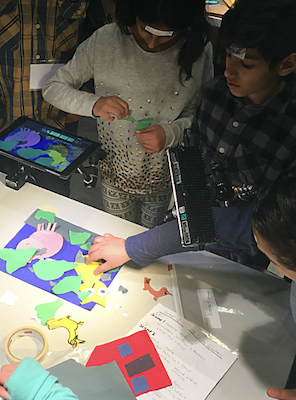
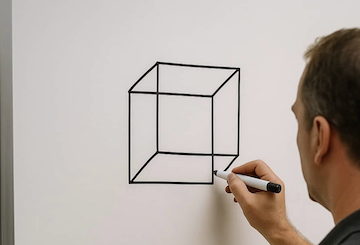
Book Excerpt 7: Sequencing, Shots, and Plots

Note to Educators: One of the biggest bottlenecks in filmmaking is editing. Editing is usually handled by just one or two people. Our approach flips that. To keep kids collaborating we front-load the editing as much as possible. The group makes creative editing decisions early. We encourage the sequencing of scenes, or “editing”, to stay a dynamic out in the open process from the start.

Young cinematographers stand and deliver their stories.

Joe begins, “Okay. Now that you've timed out your movie and sequenced your scenes, it's time to tighten things up a bit. Get out your storyboards.”

The room fills with the sounds of shuffling papers, rustling supplies, and students grouping together.

“I’m going to describe the steps for today,” Joe continues. “This is mostly a pre-production day. It’s also the moment where the artists finally get to make things pretty and artistic,” he adds with a grin.

“This scribbly mess we call a stick-figure storyboard? That’s our blueprint. Don’t lose it. It’s going to be part of every session from here on out. Today, we’re going to create big, beautiful, color illustrations of each storyboard scene.”

Each group has a box of crayons, colored pencils, markers, and blank 8x11 sheets of white paper at the ready.

“Before you get started,” Joe says with a spark in his eye, “I’m going to change the way you look at movies forever.

He walks around the room, passing out three printed worksheets.

“These worksheets will help you become the cinematographers we need you to be.”

Joe pauses for effect.

“As a filmmaker, you need to understand that where you place the camera matters. The camera is actually a character in your film.”

“For the audience, the camera is their point of view — their POV — and the movie streams straight into their brainstem from this perspective, right next to where their dreams live,” Joe explains. “We don’t think much about camera position when we watch a movie...”

“But!” Joe continues, now pacing a little, “when we make a movie, camera position takes very careful planning. These basic ideas on your worksheets? Hollywood’s been perfecting them for over 100 years.”

“If we do it right, where we place the camera will have as much impact on how our audience feels as anything our characters say or do.”

Joe turns to the board.

“We break our planning into three basic options,” he says as he writes:

Long Shot
Medium Shot
Close-Up

“Let’s review each one.”

Long shots are used when you want to give your audience a clear sense of the setting — or show differences in size,” Joe explains, pointing to the worksheet labeled Long Shots.

“For example, in our turtle movie, we might start with a long shot of the baby turtle alone on a frozen lake. That helps the audience feel how small, lost, and lonely it is in such a big, empty space.”

He pauses, then adds, “If you were using a real camera, you'd have to back up a long way to fit the entire lake in the frame.”

Medium shots are best for showing your character on screen, doing something,” Joe explains.

“If you have a scene with two characters talking, or a moment where someone’s striking a cool pose or showing off a costume, this is your go-to shot. You want the camera close enough that the character fills the frame — not too far away, not too close.”

He adds, “In our rocket movie, for example, if a boy is sneaking into a spaceship, give us a great medium shot that shows his whole body in that sneak-walking pose. Let the audience feel what he’s doing.”

Close-ups,” Joe continues, “are probably the shot you’re most familiar with — but what matters is how we use them.”

“If your characters are showing big emotions — laughing, crying, or anything in between — get in close. Let those emotions fill the screen. The closer we are, the more your audience will feel it.”

He pauses, then adds, “Close-ups are also great for small but important details. In our diaper movie, we start with a close-up of a phone screen. Why? Because the audience needs to read the text message to understand the whole story. A close-up makes sure nothing important gets missed.”


“Using your storyboard as a blueprint,” Joe says, “let’s apply these shot choices to each scene as we recreate them in living color.”

He continues, “By the time every scene is illustrated, you’ll have decided on camera positions and started designing your characters and costumes.”

Then he grins, “Once that’s done, each group will present your story to the class — a full-color show and tell.”

For the rest of the session, Joe floats between groups, offering feedback on shot selection, character design, and color choices. Not every team finishes their drawings, so presentations will kick off next time.

Before the bell rings, Joe pauses at the door.

Oh — you have homework.”

Groans ripple through the class.

“I told you this would change the way you see media,” Joe says. “I want you to notice how scenes shift between Close-Ups, Medium Shots, and Long Shots in anything you watch. Pay attention to how often the camera moves, and why it’s placed where it is.”

“These brilliant people called cinematographers work closely with directors to make those choices. But in your movies — you’re playing every role. So start noticing. It matters.”

He gives a final wave. “Goodbye!”

Who is this Joe fellow?

The Storyteller Who Makes Classrooms Cinematic

Joe Summerhays has shown more kids how to tell a story with sound and motion than any filmmaker alive.

Founder of Animating Kids and producer of the Animation Chefs webseries, Joe turns filmmaking into a team sport for the content creator generation. Through a by kids, for kids cooking-show format, the Animation Chefs have inspired tens of thousands of young creators worldwide—bringing Hollywood-level storytelling into classrooms and media labs. With 25,000+ students and educators trained in 20+ countries, Joe equips kids with the storytelling framework and creative vocabulary they’ll need to thrive in the digital age—whether directing a film or prompting an AI. this work shows how visual media literacy is reading and writing with sound and motion—complementing traditional literacy and making it relevant for the modern world.

More Testimonials:

"I am impressed by...these programs, providing young people with the skills to become creative and critical thinkers...this shares my dedication to nurturing the next generation of filmmakers and visual storytellers." — Steven Spielberg - Referencing the work of Joe Summerhays“​

"Joe (Animating Kids Founder) has turned the art of movie making for kids into a science.” — Jonathan Demme - Academy Award-Winning Director

“I absolutely love Animating Kids...you have no idea how amazing it is for a span of K-9. I’ve got the whole building covered and my planning was done for me. The kids LOVE the Animation Chefs. Win, win!!” J. Tuttle - Media Specialist

"When I found Animating Kids it changed everything. Small and not so small humans became masters of sound and motion on any subject via small group PBL dynamics." Rachel - Tech Coach - Quebec​

Animating Kids has changed everything! Fun, relevant media-making lessons for kids, and total P.D. for my non-film making teachers. A complete solution!!” — Principal - Bronx NY

​"Animating Kids really helps focus our students during remote sessions…it keeps them so engaged. Your secret recipes are a life saver." — Marisol - Sacramento Ca

"The kids love the demonstrations and it is P.D. for me as I tee it all up. Animating Kids makes me the coolest educator in their lives!" — Charlotte - London UK

"This is the most important skills-based content for today’s kids. I don't think primary educators get how impactful this approach can be. It respects media content creation as the basic literacy it is for today’s kids. — Monique - White Plains NY

“We went through the entire process (PD workshop) of learning animated filmmaking with our tablets and smartphones. We could barely keep up. In the end we came away exhilarated rather than exhausted.” — Cathy S. - Librarian​

"My head was spinning. It involved: math, writing, science, team building, art, language arts, engineering, improvisation, innovation, acting, etc. Along with another dozen areas I can’t recall. Sneaky comprehensive. Mind blown. Can’t wait to use it in class.” — Marcia - 4th Grade Teacher

“Animation Chefs have created a really inspired program! My test group of (hardened gang members) like to laugh at the videos, and they love the simple clear explanations. They just have a blast...”
— G. Zucker Austin TX

"Thank you SO much for sharing your wealth of information and opening this world to every kid! I first learned about you when my husband introduced our daughter to you. Now I am bringing it into my after school program. I’m so psyched!" — Joy H. Retail After School Specialist

"Kids sign-up for robotics, coding, and stop motion sessions. After taking all three, they rate stop motion as their favorite track BY FAR. Animating Kids is key to our success." — Shane V. After School District Lead